




Reverse Osmosis Drinking Water Systems
Enjoy professionally installed reverse osmosis drinking-water filtration with help from Hydro Plumbing, a local, family-owned and owner-led plumbing company serving Murrieta, Temecula, Wildomar, French Valley, Winchester and nearby communities.
Whether you're considering a new under-sink RO system, replacing an existing unit, connecting filtered water to a refrigerator or learning whether reverse osmosis fits your home's water-quality goals, Hydro Plumbing can help you understand the options and install the system correctly.
- Licensed & Insured
- Owner-Led Service
- Five-Star Rated
- CA License #1106968
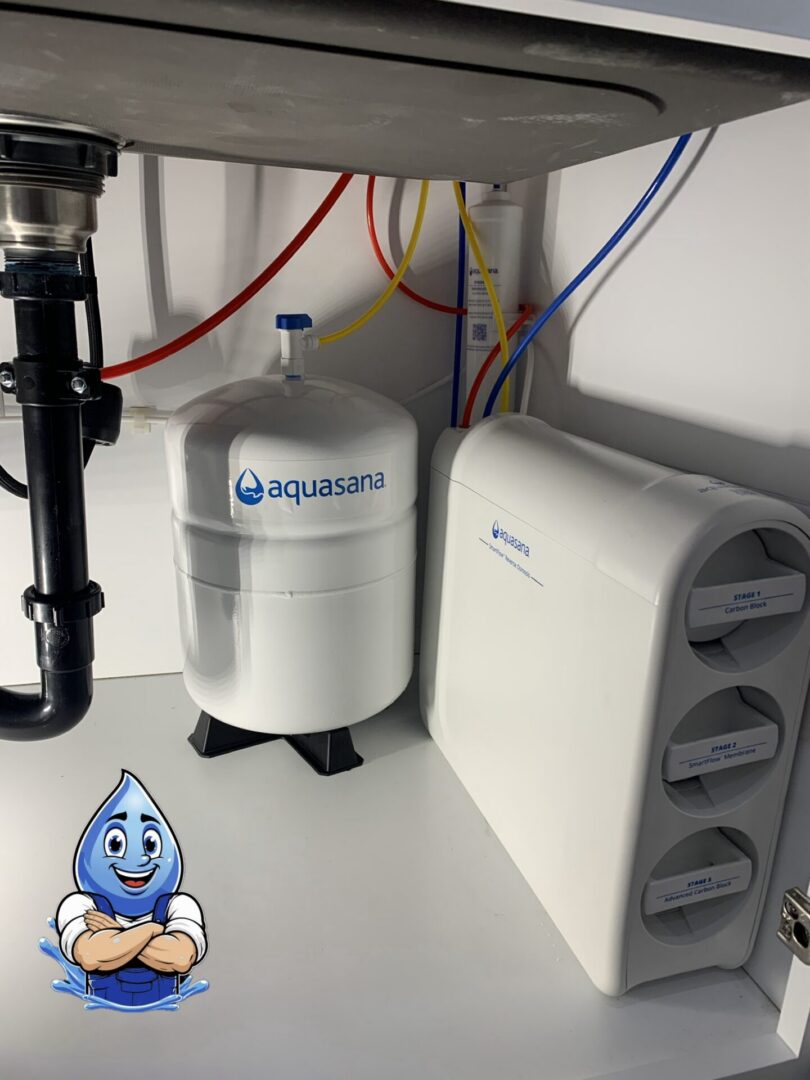
Reverse osmosis is commonly installed at the kitchen sink to provide filtered water for drinking and cooking.
What Is Reverse Osmosis & How Does It Work?
Reverse osmosis, often called RO, is a point-of-use water treatment process that uses several filtration stages and a specialized membrane to reduce certain dissolved substances and other contaminants from drinking water. Most residential RO systems are installed under the kitchen sink and supply a dedicated drinking-water faucet.
Pre-Filtration
Incoming water commonly passes through sediment and carbon filters first. These stages can help reduce particulate matter, chlorine and other substances that may affect taste or membrane performance.
RO Membrane
Water pressure moves the pre-filtered water across a semi-permeable membrane. The membrane allows water molecules to pass while reducing many dissolved substances, depending on the system design and operating conditions.
Filtered Water & Drain Flow
The treated water continues toward storage or direct dispensing, while a separate concentrate stream carries rejected dissolved material toward the system's approved drain connection.
Final Filtration & Faucet
Many systems use a final carbon polishing filter before the water reaches the dedicated RO faucet. Some systems may also supply a refrigerator or ice maker when the plumbing layout and equipment allow.
Not Every Reverse Osmosis System Is the Same
Residential RO systems vary in membrane capacity, filtration stages, storage method, recovery rate, pressure requirements, certifications and maintenance needs. Traditional systems commonly use a storage tank, while some newer designs use tankless or high-flow configurations.
The right choice depends on the home's plumbing, incoming water conditions, available under-sink space and what the homeowner wants to accomplish with their drinking-water system.
What Can a Reverse Osmosis System Reduce?
A properly selected and maintained RO system can reduce a wide range of dissolved substances, but actual performance depends on the specific system, membrane, certifications and incoming water conditions.
Dissolved Solids
Reverse osmosis membranes are commonly used to reduce total dissolved solids and many dissolved mineral salts. The amount reduced depends on membrane quality, pressure, temperature, water chemistry and system condition.
Certain Minerals & Ions
RO systems may reduce substances such as calcium, magnesium, sodium and other dissolved ions to varying degrees. Reduction percentages differ by membrane and operating conditions.
Chlorine & Taste Concerns
Carbon pre-filters and post-filters commonly work alongside the RO membrane to help reduce chlorine, certain tastes and odors, and to help protect the membrane from substances that may shorten its service life.
Certain Metals
Some certified RO systems are designed and tested for reduction of specific metals such as lead or other listed contaminants. The exact claim should always be verified on the manufacturer's performance data for that particular system.
Certain Dissolved Contaminants
Depending on the membrane and system certification, RO may reduce certain dissolved contaminants such as nitrate or other listed substances. Not every system is certified for the same reduction claims.
Drinking-Water Treatment
Residential reverse osmosis is primarily a point-of-use treatment method for drinking and cooking water. It is not automatically a replacement for whole-home filtration, softening or other treatment needs elsewhere in the home.
Reverse Osmosis Does Not Mean “Removes Everything”
No residential water-treatment system should be described as universally removing every possible contaminant. System performance can change based on water pressure, membrane condition, filter age, temperature, incoming water chemistry and the design of the equipment.
Some substances may require additional treatment or a different filtration method. The goal is to match the system to the homeowner's actual water-quality goals rather than assume one piece of equipment solves every water concern.
Homeowner tip: if you have a specific concern about your water, identify that concern first and compare it against the tested reduction capabilities of the system you are considering.
What’s Inside a Reverse Osmosis System?
Most residential RO systems combine several components that each perform a different job. The exact layout varies by manufacturer and system type, but understanding the major parts makes it easier to compare equipment and maintain the system properly.
Sediment Pre-Filter
The sediment stage is commonly the first line of filtration. It helps capture particulate matter such as rust, sand, scale or other suspended material before the water reaches the finer filtration stages.
Carbon Pre-Filter
Carbon filtration is commonly used before the RO membrane to help reduce chlorine, taste and odor concerns and to protect certain membrane materials from chemical exposure that could reduce performance or service life.
Reverse Osmosis Membrane
The membrane is the primary RO treatment stage. Water pressure moves water across the membrane while many dissolved substances are rejected and carried away through the concentrate or drain stream.
Post-Filtration
Many RO systems include a final carbon or polishing filter after the membrane. This stage is commonly intended to improve taste before the treated water reaches the faucet or connected appliance.
Storage Tank or Tankless Design
Traditional systems commonly store treated water in a pressurized tank, while some newer systems use tankless or high-flow configurations. Each design has different space, flow and maintenance considerations.
Dedicated Drinking-Water Faucet
Most under-sink RO systems dispense treated water through a separate faucet at the kitchen sink. Depending on the system and plumbing layout, filtered water may also be routed to a refrigerator or ice maker.
The Drain Connection Is Part of the System
Reverse osmosis produces both treated water and a separate concentrate stream. That concentrate stream must be connected to the home's drainage system in a manner that follows the equipment instructions and applicable plumbing requirements.
Proper tubing routing, secure fittings, drainage configuration and leak testing are all important parts of a clean RO installation.
Reverse Osmosis Installation Is More Than Connecting a Few Tubes
A reverse osmosis system becomes part of your home's plumbing. Professional installation helps ensure the water supply, filtration equipment, drain connection, faucet and optional appliance connections are installed correctly and tested for proper operation.
Water Supply Connection
The RO system needs a secure connection to the appropriate cold-water supply without creating unnecessary stress on existing plumbing.
RO Drain Connection
Concentrate water produced by the RO process requires a properly configured drain connection consistent with the equipment and plumbing setup.
Dedicated Drinking Faucet
The RO faucet should be positioned for convenient use while accounting for the sink, countertop, cabinet space and existing fixtures.
Leak & Function Testing
Connections should be inspected and tested after installation so leaks, flow problems or improper operation can be addressed before completion.
Under-Sink Space, Tubing & Appliance Connections Matter
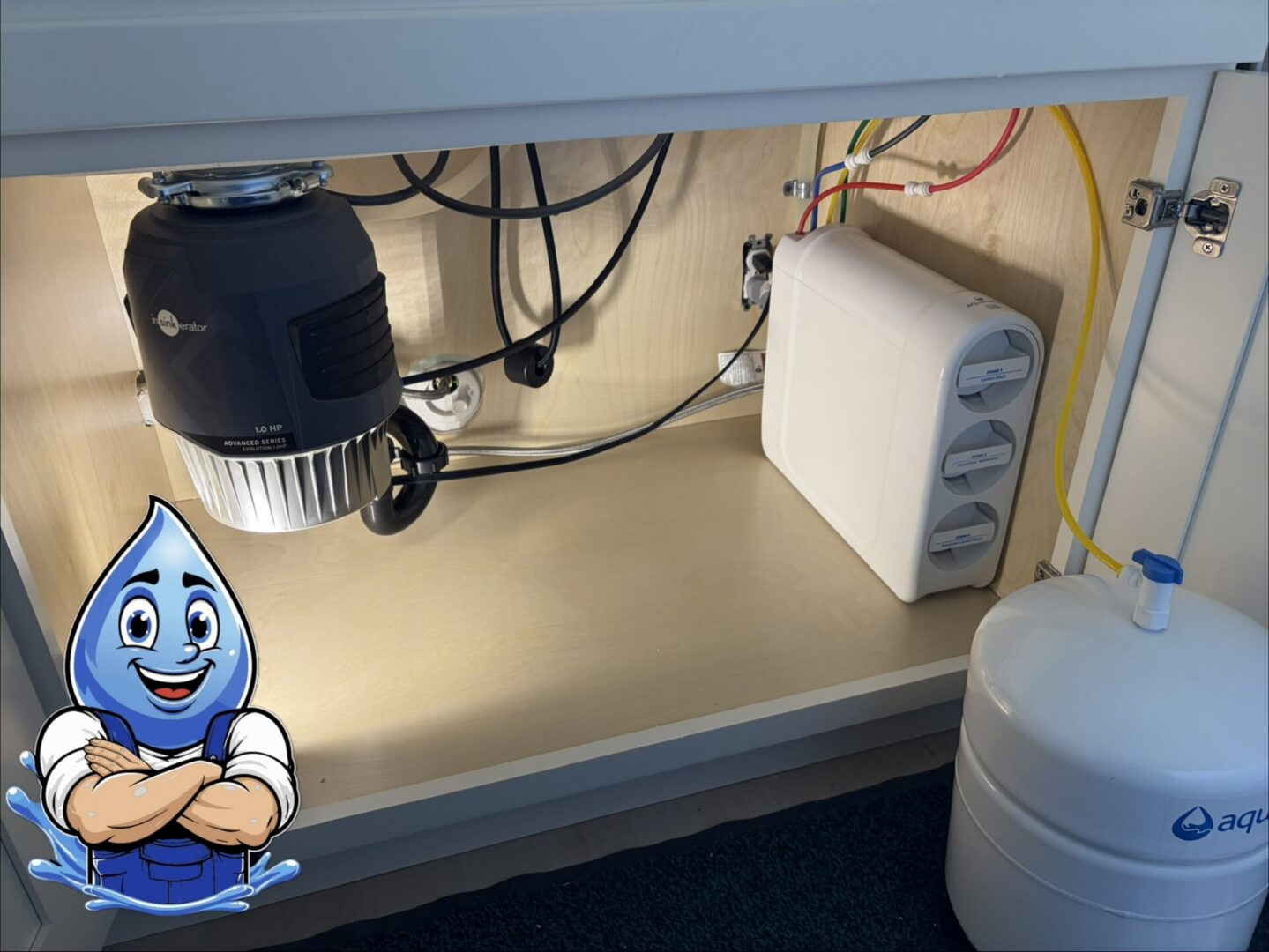
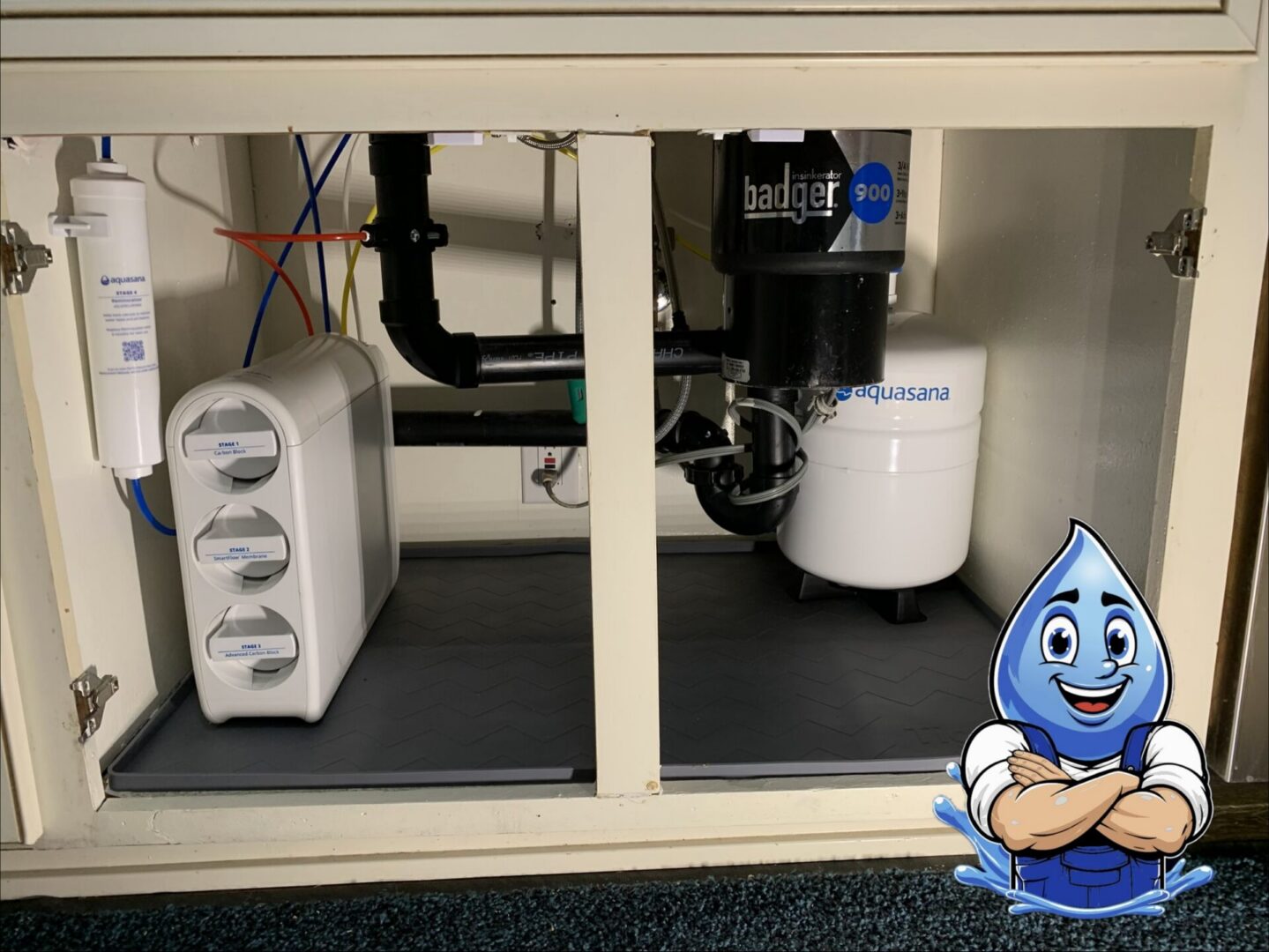
Reverse osmosis systems often share a cabinet with drain piping, garbage disposal components, shutoff valves and household storage. Equipment placement should leave reasonable access for future filter changes and service while keeping tubing organized and protected from kinks or unnecessary strain.
When compatible with the RO equipment and plumbing layout, treated water may also be routed to a refrigerator or ice maker. Longer tubing runs, elevation changes and system pressure can affect how well that connection performs.
Reverse Osmosis vs. Whole-Home Water Filtration
These systems solve different types of water-treatment goals. Reverse osmosis is commonly used for drinking and cooking water at one location, while whole-home filtration treats water before it is distributed throughout the house.
Reverse Osmosis
Residential RO systems are commonly installed under the kitchen sink and focus on producing treated water for drinking, cooking and, when properly connected, a refrigerator or ice maker.
- Typically serves one primary drinking-water location.
- Uses a specialized membrane plus pre- and post-filtration.
- Commonly chosen when dissolved-solids reduction is an important goal.
- Requires periodic filters and membrane maintenance.
Whole-Home Water Filtration
Whole-home filtration is installed on the home's main water supply so treated water can serve showers, sinks, appliances and other fixtures throughout the house, depending on the type of filtration equipment selected.
- Treats water entering the home before distribution.
- Can address broader household filtration goals.
- Equipment and media vary based on the treatment objective.
- May be paired with other water-treatment equipment when appropriate.
Can You Use Whole-Home Filtration and Reverse Osmosis Together?
Yes. Some homeowners choose whole-home filtration for broader household water treatment and add reverse osmosis at the kitchen sink for an additional level of point-of-use drinking-water treatment.
Whether that combination makes sense depends on the home's water conditions, the equipment already installed and what the homeowner actually wants to improve. More filtration is not automatically better—the system should match the goal.
Reverse Osmosis Maintenance, Filters & Membrane Replacement
RO systems are not install-it-and-forget-it equipment. Routine filter changes and periodic system service help protect water quality, flow and membrane performance over time.
Pre-Filter Replacement
Sediment and carbon pre-filters collect material before water reaches the RO membrane. As those filters load with use, water flow and treatment performance can be affected.
RO Membrane Service
The membrane generally lasts longer than routine pre-filters, but it does not last forever. Membrane life depends on water chemistry, system use, pressure, pre-treatment and maintenance history.
Post-Filter Changes
Final polishing filters are commonly replaced as part of scheduled maintenance to help maintain the taste and quality of water reaching the dedicated faucet.
System Inspection & Sanitation
Maintenance is also a good opportunity to inspect tubing, fittings, the tank, faucet, drain connection and system condition, and to follow the manufacturer's sanitation procedures when required.
Signs Your RO System May Need Attention
- Noticeably slower faucet flow
- Change in taste or odor
- Filters are overdue for replacement
- Unusual system cycling or noise
- Water leaking around tubing or fittings
- Reduced storage-tank performance
If an RO system has low flow, leaking connections, poor pressure, an aging storage tank, drain issues or uncertain maintenance history, Hydro Plumbing can evaluate the plumbing around the system and help determine the appropriate next step.
Reverse Osmosis & Southern California Water
Choosing an RO system should start with the water entering the home and what you actually want the system to accomplish. Water chemistry, mineral content, pressure and household usage can all influence system selection and long-term performance.
Start With the Home's Actual Water Conditions
Two homes can have different plumbing conditions, equipment and water-treatment goals even when they are in the same community. Instead of choosing an RO system based only on advertising claims, consider how the equipment will operate with the home's actual water supply and plumbing.
Mineral content can contribute to scale and may affect RO membrane performance and maintenance requirements over time.
RO membranes rely on adequate incoming pressure. System requirements vary, and low pressure can affect production and faucet flow.
Drinking-water goals should guide system selection rather than assuming every household needs the same number of filtration stages.
Whole-home filtration, water softening or other treatment equipment may influence how a new point-of-use RO system should be configured.
What About Hard Water?
Reverse osmosis and water softening are not the same process. An RO system treats water at a specific point of use and can reduce many dissolved minerals, while a traditional water softener is designed to address hardness minerals throughout the plumbing system.
Higher mineral concentrations can increase scaling potential on RO membranes and affect efficiency or membrane life. Whether additional pretreatment makes sense depends on the incoming water conditions and the requirements of the specific RO equipment being installed.
Hydro Plumbing provides professional reverse osmosis and water-filtration plumbing services for homeowners throughout Murrieta and surrounding Southwest Riverside County communities.
Why Choose Hydro Plumbing for Reverse Osmosis Installation?
Reverse osmosis equipment is only one part of the job. The quality of the plumbing connections, system placement, communication and follow-through all matter. Hydro Plumbing provides owner-led service with a focus on dependable workmanship and helping homeowners understand the system being installed.
Hydro Plumbing is a local, family-owned plumbing company founded by Kel Ricks and built around direct communication and local standards.
California Contractor License #1106968 with professional plumbing installation and service.
Hydro Plumbing has experience installing various water-filtration and reverse osmosis systems without pushing every homeowner toward one manufacturer.
Trusted by local homeowners for dependable service, clear communication and quality plumbing workmanship.
Knowledge Without the Corporate Sales Pitch
Hydro Plumbing was founded in 2023 by Kel Ricks and brings over a decade of plumbing knowledge to residential service and installation work. The goal is not to oversell equipment—it is to help homeowners understand the plumbing, filtration options and installation requirements so they can make a confident decision.
Whether the project involves a new RO system, replacement equipment, refrigerator connection, filtration upgrades or related plumbing work, Hydro Plumbing focuses on clean installation, dependable workmanship and straightforward communication.
Reverse Osmosis Frequently Asked Questions
These are some of the most common questions homeowners have when comparing, installing or maintaining a residential reverse osmosis drinking-water system.
Does reverse osmosis remove all minerals from water?
Reverse osmosis can reduce many dissolved minerals and ions, but the amount removed varies by membrane, pressure, water chemistry and system condition. It is more accurate to think of RO as a strong dissolved-solids reduction process rather than a system that universally removes every mineral or substance.
Does a reverse osmosis system waste water?
RO systems produce a treated-water stream and a separate concentrate stream that carries rejected dissolved material to the drain. The amount of concentrate water varies significantly by system design, water pressure, membrane efficiency and operating conditions.
Newer systems may offer improved recovery compared with some older designs, but homeowners should compare the recovery or efficiency information for the specific equipment being considered.
Is a tankless reverse osmosis system better than one with a storage tank?
Not automatically. Traditional storage-tank systems and tankless RO systems each have advantages. Tank systems store treated water for later use, while tankless designs may save cabinet space and provide higher on-demand production depending on the equipment.
The better choice depends on available space, water demand, pressure, electrical requirements, maintenance preferences and the specific system design.
Can reverse osmosis water be connected to my refrigerator or ice maker?
Often, yes. A properly designed RO system may be able to supply a refrigerator or ice maker, but the plumbing layout, tubing distance, elevation, storage capacity and available pressure can affect performance.
The system and refrigerator manufacturer requirements should also be reviewed before making the connection.
How often do reverse osmosis filters need to be changed?
There is no universal filter-change schedule. Replacement timing varies by manufacturer, filter capacity, household use, incoming water quality and system design. Pre-filters and post-filters are usually serviced more often than the RO membrane.
Follow the maintenance schedule for the specific system installed and pay attention to performance changes that may indicate service is needed sooner.
How long does a reverse osmosis membrane last?
Membrane life depends on several factors, including incoming water quality, hardness, chlorine exposure, water pressure, usage and how well the pre-filters are maintained. Because those conditions vary from home to home, membrane replacement should be based on the system manufacturer's guidance and actual performance rather than one universal timeline.
Does reverse osmosis replace whole-home water filtration?
Usually not. Reverse osmosis is commonly used as a point-of-use drinking-water system, while whole-home filtration treats water before it is distributed throughout the house.
Some homeowners use both systems together when they want broader household filtration plus additional treatment for drinking and cooking water.
Can hard water affect a reverse osmosis system?
Yes. Higher concentrations of hardness minerals can contribute to scaling on the membrane and may affect efficiency or membrane life over time. The severity depends on the incoming water chemistry and how the particular RO system is designed.
In some homes, pretreatment may be appropriate, but the correct approach depends on the actual water conditions and equipment requirements.
Can I install an under-sink RO system myself?
Some systems are marketed for homeowner installation, but the project still involves the cold-water supply, drain connection, faucet installation, tubing routing and leak testing. Countertop or sink drilling may also be required.
Professional plumbing installation can be especially useful when cabinet space is limited, existing plumbing needs modification, a refrigerator connection is being added or the homeowner wants the finished installation checked for proper operation.
How do I know which reverse osmosis system is right for my home?
Start with what you want the system to accomplish. Consider available cabinet space, drinking-water demand, incoming pressure, water conditions, maintenance requirements, tested reduction claims and whether you want a storage-tank or tankless configuration.
Hydro Plumbing can help with the plumbing side of the decision and professional installation without assuming every homeowner needs the same brand or system.
Ready to Improve Your Drinking-Water Setup?
Whether you're installing a new reverse osmosis system, replacing existing equipment or trying to determine the right filtration approach for your home, Hydro Plumbing can help with professional plumbing installation, straightforward guidance and dependable workmanship.
Serving Murrieta, Temecula, Wildomar, French Valley, Winchester and nearby communities.