




Tankless Water Heater Installation, Repair & Maintenance in Murrieta and Temecula
Enjoy endless hot water, improved energy efficiency, and dependable performance with professional tankless water heater services from Hydro Plumbing. Whether you're installing a brand-new unit, troubleshooting an error code, repairing an existing system, or scheduling an annual flush to remove hard water scale, we help homeowners throughout Murrieta, Temecula, and surrounding communities keep their tankless systems operating at peak performance.
Is a Tankless Water Heater Right for Your Home?
Tankless systems can provide dependable hot water, improved efficiency, and valuable space savings—but the best results depend on proper sizing, installation, gas supply, venting, water quality, and regular maintenance. Hydro Plumbing helps homeowners in Murrieta, Temecula, and nearby communities understand whether a tankless water heater is the right fit for their home and hot-water needs.
Continuous Hot Water
A properly sized tankless unit heats water as it is needed, helping your household avoid running out of stored hot water during showers, laundry, and other daily activities.
Energy-Efficient Operation
Because tankless systems do not continuously heat a large storage tank, they can reduce standby energy loss and operate efficiently when matched correctly to the home.
Space-Saving Design
Wall-mounted tankless water heaters use less floor space than many traditional storage systems, making them attractive for garages, utility areas, and compact installations.
Long-Term Performance
With professional installation, routine flushing, and timely repairs, a quality tankless water heater can provide many years of reliable service and consistent performance.
Why More Homeowners Are Choosing Tankless Water Heaters
A properly selected and professionally installed tankless water heater can provide dependable on-demand hot water, free up valuable floor space, and reduce the standby energy losses associated with continuously storing a large tank of heated water.
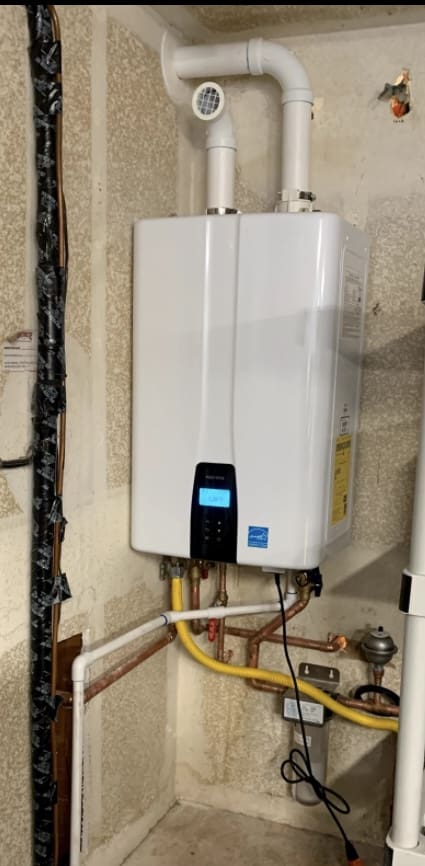
Tankless Performance Starts With Proper Planning
Tankless water heaters heat water as it is needed rather than maintaining a large storage tank around the clock. For the right household, that can mean long periods of continuous hot water, improved space utilization, and efficient operation.
The benefits depend heavily on correct system sizing, fuel supply, installation conditions, household demand, water quality, and ongoing maintenance. Hydro Plumbing evaluates the complete installation rather than treating the unit as a simple appliance swap.
Household hot-water demand should be matched to the unit’s flow capacity and expected simultaneous use.
Gas supply and venting must support the manufacturer’s installation requirements and firing rate.
Water quality and maintenance directly affect scale buildup, efficiency, and long-term reliability.
Continuous Hot Water for Properly Sized Systems
A tankless water heater does not run out of stored hot water in the same way as a conventional tank. When correctly sized, it can continue producing hot water for long periods while demand remains within the unit’s capacity.
Free Up Valuable Floor Space
Wall-mounted tankless units can eliminate the footprint of a large storage tank. This may create additional usable space in a garage, utility room, closet, or other mechanical area.
Heat Water When the Home Needs It
Tankless systems do not continuously maintain a large stored volume of hot water. That can reduce standby heat loss and support more efficient operation when the system is properly installed and matched to the home.
Designed for Ongoing Maintenance and Repair
Tankless water heaters include serviceable components such as inlet filters, ignition systems, flow sensors, valves, fans, heat exchangers, control boards, and recirculation components.
Tankless Is an Excellent Option—but It Is Not Automatically Right for Every Home
The best recommendation depends on household demand, available gas capacity, venting options, electrical requirements, water quality, installation cost, recirculation needs, and the homeowner’s priorities. Hydro Plumbing evaluates those factors before recommending an upgrade.
Is a Tankless Water Heater Right for Your Home?
Tankless water heaters can be an excellent upgrade, but the right system must be selected for the home’s actual hot-water demand, gas supply, incoming water temperature, venting options, plumbing layout, and long-term maintenance needs.
A Tankless Unit Must Be Matched to Real Household Demand
Choosing a tankless water heater based only on brand, price, or unit size can lead to disappointing performance. A properly planned system considers how many fixtures may operate at the same time, how much temperature rise is required, and whether the property’s utilities can support the selected equipment.
Hydro Plumbing evaluates the installation as a complete system. That includes the unit, gas piping, venting, condensate drainage, water-line connections, service valves, electrical requirements, recirculation needs, and future maintenance access.
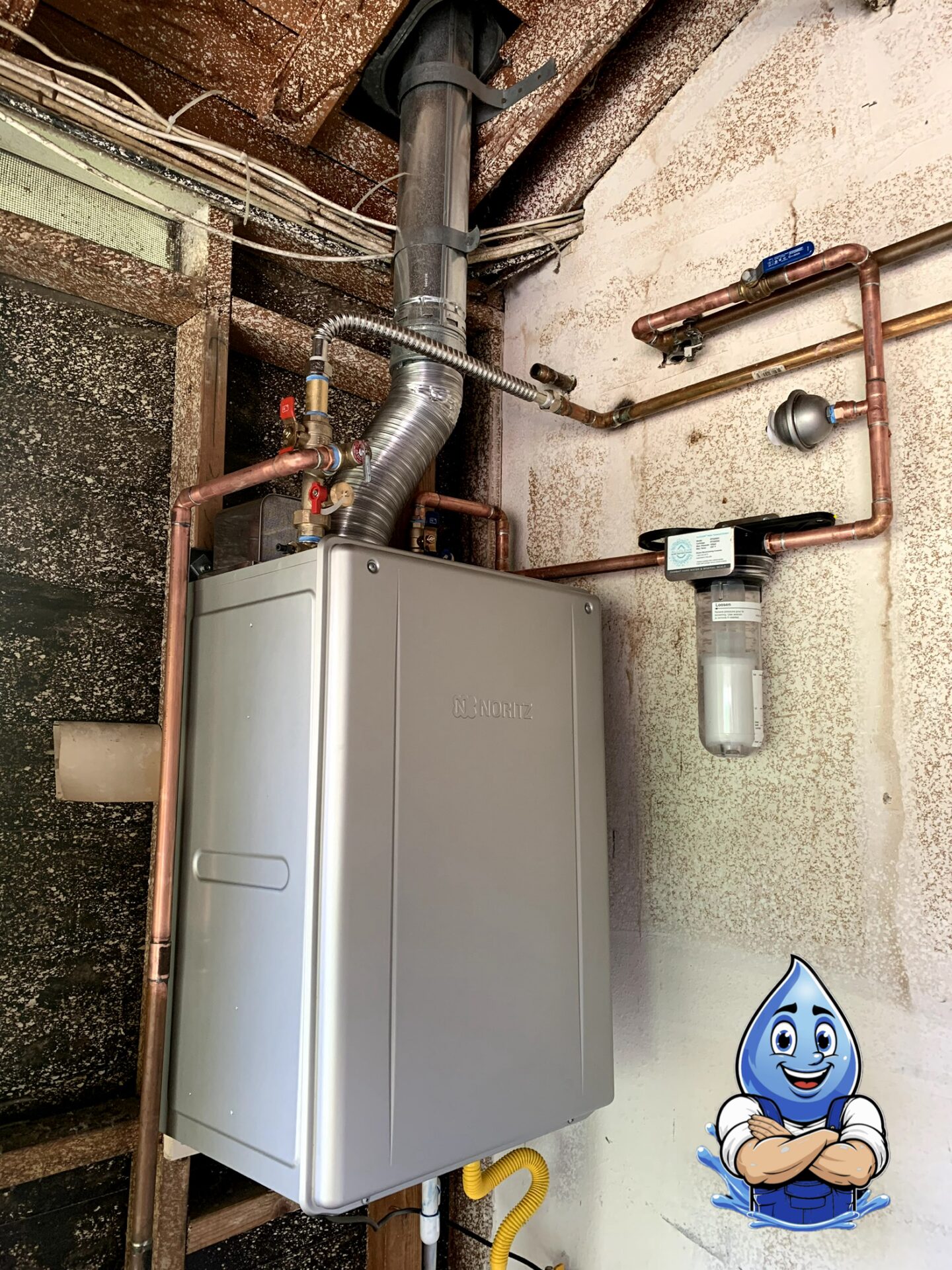
How Much Hot Water Does the Home Need at One Time?
Tankless systems are rated by the amount of heated water they can produce under specific conditions. The required flow changes when multiple showers, faucets, tubs, washing machines, or dishwashers are operating simultaneously.
Can the Existing Gas System Support the Unit?
Gas-fired tankless water heaters can have a higher firing rate than conventional storage units. The existing gas meter, regulator, piping, pipe length, fittings, and other connected appliances must be considered.
Venting Must Match the Selected Equipment
Venting requirements vary by unit type, installation location, vent material, termination clearances, intake configuration, and total vent length. Existing storage-tank venting cannot automatically be reused.
High-Efficiency Units May Produce Condensate
Condensing tankless water heaters create water during operation that must be discharged through an appropriate condensate drain. The drain route, material, neutralization needs, and termination should be planned.
Most Gas Tankless Units Still Need Electricity
Electronic controls, ignition, sensors, fans, freeze protection, and recirculation components generally require a suitable electrical connection. A power outage may prevent normal hot-water operation.
Hard Water Can Affect Long-Term Performance
Mineral scale can collect inside the heat exchanger and water passages. Southern California water conditions make flushing, descaling, inlet-filter cleaning, and water-quality planning especially important.
When Tankless May Be a Strong Fit—and When to Compare Other Options
Tankless water heating works best when the home, utilities, installation budget, and homeowner expectations all align with the system.
Common Reasons Homeowners Upgrade
- Long periods of hot-water use are common.
- Floor space is valuable or limited.
- The home has adequate gas and utility capacity.
- A practical venting and condensate route is available.
- The homeowner is comfortable with routine maintenance.
- Long-term performance matters more than the lowest upfront cost.
Conditions That Require Careful Review
- The gas system cannot easily support the required firing rate.
- Several high-flow fixtures may operate simultaneously.
- Venting or condensate drainage would be unusually difficult.
- The homeowner wants the lowest possible initial installation cost.
- There is no practical plan for hard-water maintenance.
- The property has electrical or utility limitations.
Recirculation Can Affect Convenience, Water Use, and Efficiency
A tankless water heater does not automatically provide instant hot water at every fixture. The time it takes for hot water to arrive still depends on pipe length, plumbing layout, flow rate, and whether a recirculation system is installed and properly configured.
Hydro Plumbing Helps You Compare the Complete Installation
The right recommendation should account for equipment cost, utility upgrades, installation requirements, maintenance, household demand, and expected long-term performance—not simply whether a tankless unit can be mounted on the wall.
Tankless Water Heater Flushing, Descaling & Preventive Maintenance
Tankless water heaters are serviceable systems—not maintenance-free appliances. Periodic flushing and inspection can help remove mineral buildup, maintain water flow, support efficient heat transfer, and identify developing problems before they cause a loss of hot water.
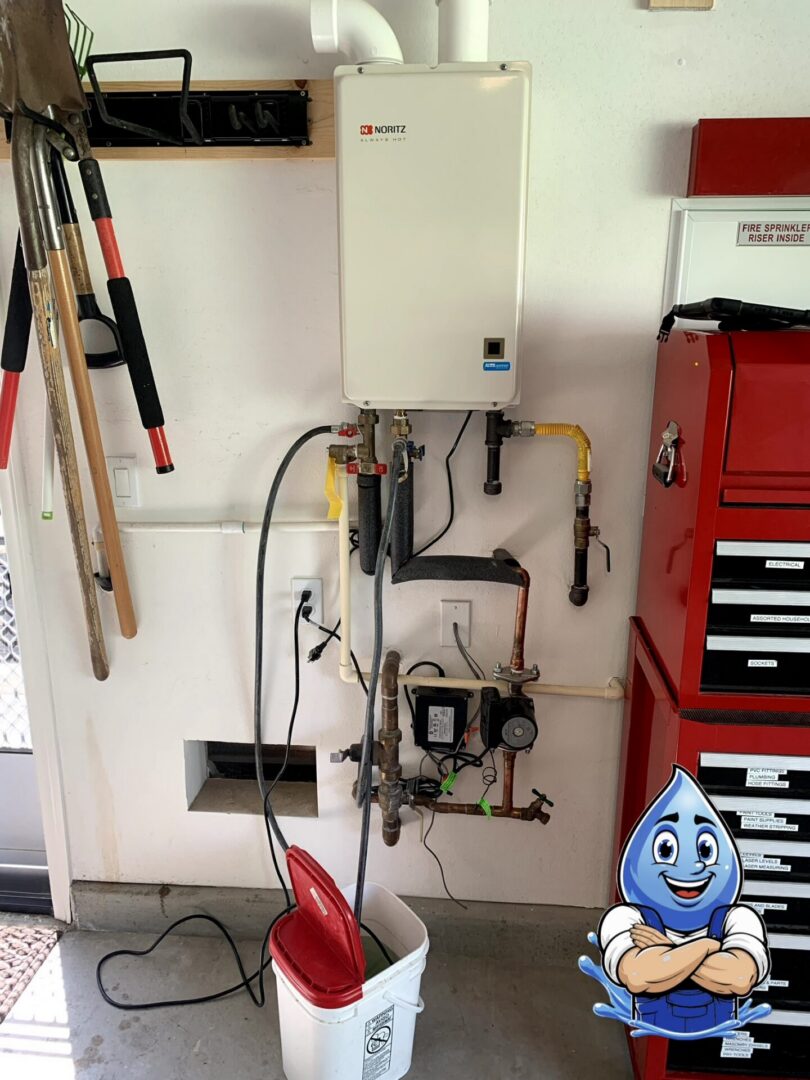
Mineral Scale Can Build Up Inside the Heat Exchanger
As water passes through a tankless system, dissolved minerals can collect inside the heat exchanger and narrow water passages. The rate of buildup depends on water hardness, operating temperature, household demand, maintenance history, and whether water treatment is installed.
A professional tankless flush circulates an appropriate descaling solution through the water-heating circuit to help loosen and remove accumulated mineral deposits. Maintenance may also include inlet-filter cleaning, visual inspection, operational testing, and review of system error history.
Supports heat transfer by reducing mineral buildup inside water passages and the heat exchanger.
Helps maintain flow by cleaning deposits and debris that may restrict water movement.
Creates an inspection opportunity for valves, filters, venting, condensate drainage, leaks, and error codes.
Inspect the Unit and Review Performance
The service begins with a visual evaluation of the tankless unit, isolation valves, piping, venting, condensate components, visible leaks, stored error information, and any symptoms reported by the homeowner.
Connect the Flush Equipment Safely
When proper service valves are installed, the hot and cold water circuit can be isolated so the flushing pump and hoses circulate solution through the heat exchanger without sending it into the home’s plumbing fixtures.
Circulate Cleaning Solution Through the Heat Exchanger
An appropriate tankless descaling solution is circulated through the water-heating passages for a suitable period based on the system condition, product instructions, and service procedure.
Clean Accessible Filters and Inspect Service Components
Depending on the model and service scope, maintenance may include cleaning the cold-water inlet filter, reviewing condensate drainage, checking accessible connections, and inspecting for corrosion or moisture.
Return the System to Service and Verify Operation
After flushing, the system is rinsed as appropriate, valves are returned to normal operating position, connections are checked, and the unit is tested for ignition, temperature response, flow, and visible leakage.
Explain Findings and the Recommended Service Interval
Hydro Plumbing can explain visible buildup, service findings, equipment condition, water-quality concerns, and whether a shorter or longer maintenance interval may be appropriate for the home.
Tankless Problems Can Develop Gradually
Mineral buildup and restricted flow may not cause an immediate shutdown. Small performance changes can appear before the system produces a clear error or stops heating properly.
The Correct Interval Depends on the Home and Water Conditions
Many homeowners use annual service as a practical maintenance schedule, especially in hard-water areas. However, the right interval may be shorter or longer depending on the manufacturer’s guidance, water hardness, temperature settings, household demand, treatment equipment, and the amount of buildup observed during service.
Water Treatment and Maintenance Work Together
Whole-home filtration or other water-treatment equipment may help address certain water-quality concerns, but it does not eliminate the need to follow the tankless manufacturer’s maintenance requirements. The best solution depends on the home’s actual water conditions and homeowner goals.
Schedule Maintenance Before Performance Begins to Decline
Hydro Plumbing provides tankless water heater flushing and maintenance in Murrieta, Temecula, French Valley, Wildomar, Menifee, and nearby Southwest Riverside County communities.
Tankless Water Heater Repair vs. Replacement
A tankless water heater problem does not automatically mean the entire system must be replaced. Many ignition, flow, sensor, valve, maintenance, and control issues may be repairable. The right decision depends on the unit’s age, condition, repair history, parts availability, installation quality, and expected long-term reliability.
Start With the Cause of the Failure
Tankless systems rely on multiple components working together: water flow must be detected, ignition must occur correctly, combustion air and exhaust must move properly, and the heat exchanger must transfer energy without excessive restriction or scale.
Hydro Plumbing evaluates the symptoms, error history, maintenance condition, water flow, gas supply, venting, electrical power, visible components, and installation conditions before explaining whether a focused repair or complete replacement is the more practical option.
Review the error code and symptoms rather than replacing parts based only on a display message.
Check maintenance and water quality because scale and restricted filters can resemble component failure.
Evaluate the entire installation including gas delivery, venting, condensate drainage, electrical supply, plumbing connections, and recirculation controls.
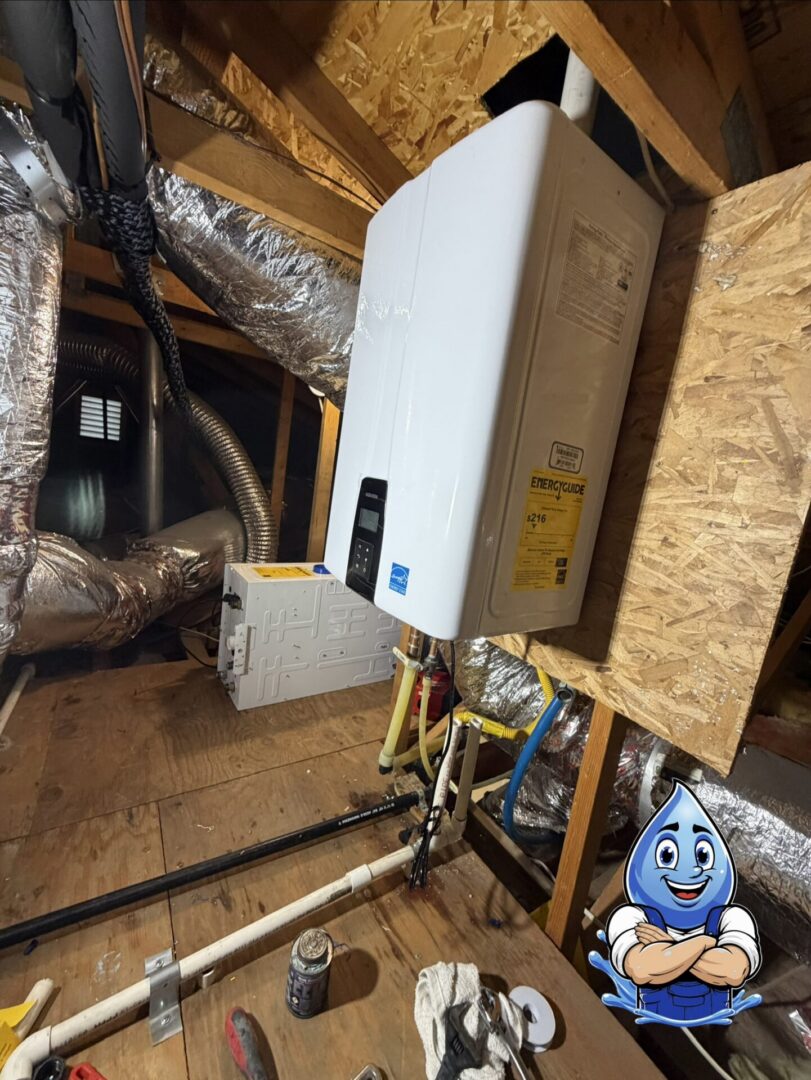
Error Codes and System Lockouts
Tankless displays may report ignition, combustion, flow, venting, overheating, sensor, scale, or communication concerns. The code helps guide testing but does not always identify the complete cause by itself.
Ignition Failure or Flame Loss
Ignition problems may involve fuel delivery, valves, electrodes, flame sensing, venting, airflow, condensate, electrical controls, maintenance, or other operating conditions.
Fluctuating Water Temperature
Temperature swings may be related to changing flow, fixture mixing, crossover, recirculation settings, restricted filters, mineral buildup, undersizing, sensors, or control issues.
Low Flow or Failure to Activate
A unit may not fire when flow is below its activation threshold or when inlet filters, fixtures, valves, sensors, scale, or plumbing restrictions interfere with normal water movement.
Mineral Buildup and Overheating
Scale can restrict water passages, interfere with heat transfer, increase operating temperatures, reduce output, and contribute to shutdowns or premature component stress.
Internal or External Water Leakage
Moisture may come from fittings, service valves, condensate components, freeze damage, internal piping, heat exchangers, relief piping, or adjacent plumbing connections.
When Repairing the Existing Tankless Unit May Make Sense
A targeted repair can be a practical choice when the equipment remains serviceable, the cause is identifiable, and the expected repair value is reasonable compared with replacement.
An Older Tankless Unit Can Reach a Point of Diminishing Returns
Replacement may be the more practical path when the unit has experienced repeated failures, major internal leakage, advanced scale damage, unavailable parts, an expensive heat-exchanger problem, or installation limitations that should be corrected.
Repair and Replacement Should Be Compared as Complete Solutions
Some Tankless Problems Require Prompt Attention
Turn off the unit and water supply when it is safe and appropriate. Leave the area and contact the gas utility or emergency services if you suspect a gas leak. Hydro Plumbing can help with urgent tankless plumbing concerns and explain the next repair step.
Get an Honest Evaluation of Your Tankless Water Heater
Hydro Plumbing provides tankless water heater diagnostics, repair, replacement, and swap-out service throughout Murrieta, Temecula, French Valley, Wildomar, Menifee, and nearby communities.
What Goes Into a Professional Tankless Water Heater Installation?
A dependable tankless installation involves much more than attaching a new unit to the wall. Proper sizing, gas delivery, venting, condensate drainage, water connections, electrical requirements, service access, startup, and system testing all affect safety, comfort, efficiency, and long-term performance.
The Equipment Is Only One Part of the Installation
Even a quality tankless water heater may perform poorly when it is undersized, supplied by inadequate gas piping, installed with unsuitable venting, or placed where maintenance access is difficult.
Hydro Plumbing evaluates the property as a complete hot-water system. The goal is to match the equipment to the household while creating an installation that can be safely operated, properly maintained, and professionally serviced in the future.
Correct equipment selection based on household demand, temperature rise, fuel type, location, and homeowner priorities.
Appropriate utility planning for gas, electrical power, venting, condensate, and water-line connections.
Serviceable installation details that support future flushing, diagnostics, repairs, and routine maintenance.
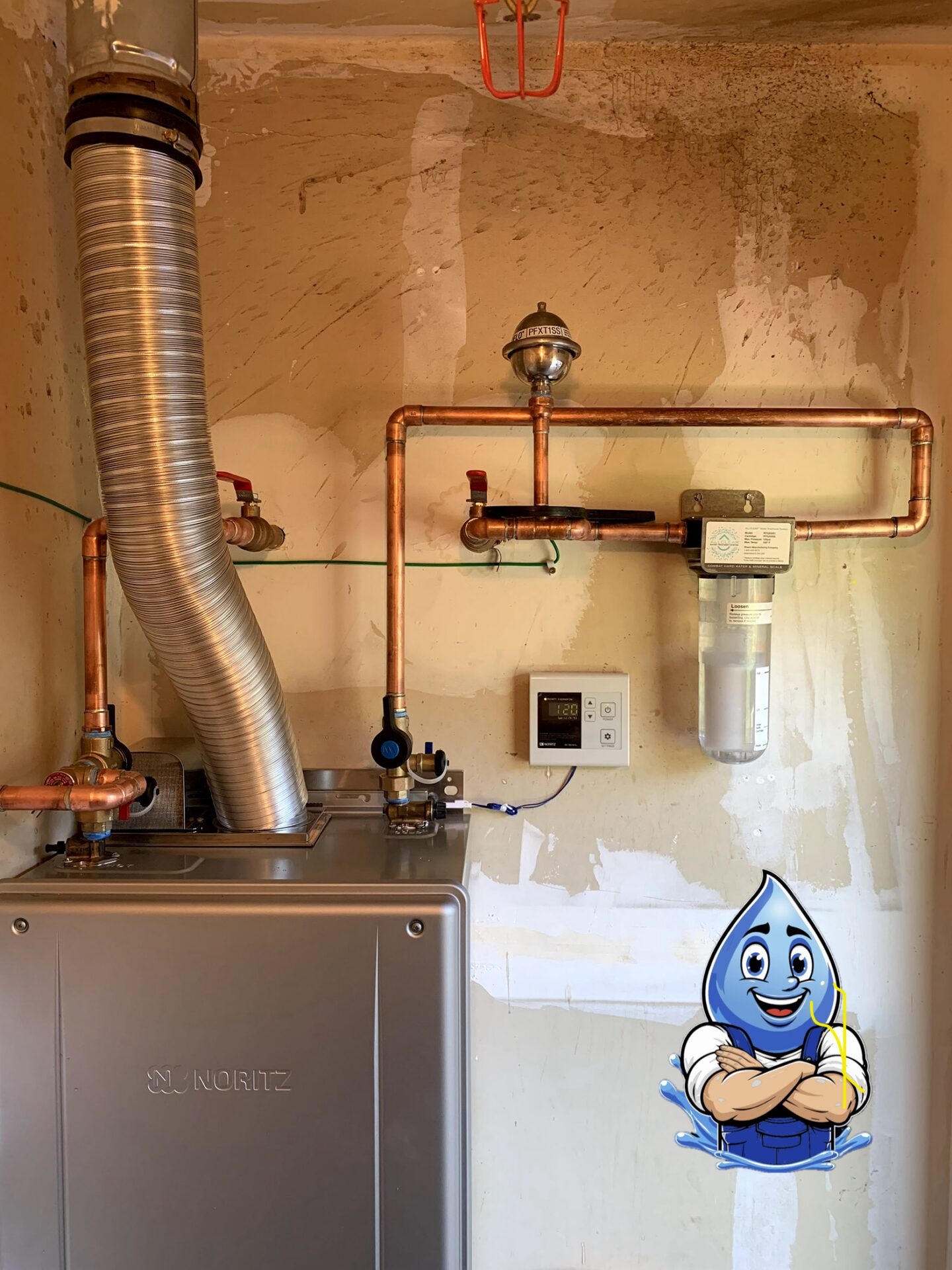
Review Hot-Water Demand and Installation Goals
The process begins by understanding household size, fixture use, simultaneous demand, existing equipment, desired comfort, recirculation preferences, and the homeowner’s long-term priorities.
Match Flow Capacity to the Required Temperature Rise
Tankless sizing considers expected gallons per minute, incoming water temperature, desired outlet temperature, fixture demand, and the number of hot-water uses that may occur at the same time.
Confirm Gas Delivery and Connected Appliance Demand
Gas-fired tankless systems may require review of the gas meter, regulator, pipe diameter, developed length, fittings, firing rate, and the demand created by other gas appliances on the property.
Plan Combustion Air, Exhaust, Clearances, and Access
Venting must be compatible with the selected equipment and installation location. Termination clearances, total vent length, intake configuration, material, weather exposure, and future service access must be considered.
Install Water Connections, Service Valves, and Condensate Drainage
The installation may include new hot and cold water connections, isolation and flushing valves, pressure-related components, relief discharge piping, condensate drainage, and neutralization where appropriate.
Test the System Before the Installation Is Complete
After installation, the equipment should be started, inspected, and tested for normal ignition, temperature response, flow, leaks, venting, condensate drainage, controls, and applicable recirculation settings.
What Hydro Plumbing Reviews During Installation Planning
Every property is different. The final scope depends on the selected equipment, existing plumbing, fuel system, installation location, manufacturer requirements, and applicable project conditions.
Tankless Water Heaters Can Require Significant Fuel Capacity
A gas-fired tankless unit may have a higher maximum input than the storage water heater it replaces. The existing gas system should be evaluated before assuming the same line can support the new equipment.
Hydro Plumbing can review the visible gas piping and installation requirements and explain when gas-line modification, resizing, or additional evaluation may be necessary.
Common Details That Should Not Be Overlooked
Converting from a storage tank to a tankless system can require changes beyond the equipment itself. A complete proposal should account for the conditions that must be corrected or added for the installation to work properly.
Assuming the existing gas line automatically has enough capacity
Reusing incompatible or improperly routed venting materials
Installing the unit without accessible flushing and isolation valves
Ignoring condensate drainage on high-efficiency condensing systems
Selecting equipment without evaluating simultaneous household demand
Placing equipment where future maintenance or repairs are difficult
The Best Tankless System Is the One That Fits the Property
Hydro Plumbing works with established tankless equipment options and evaluates capacity, parts support, features, maintenance needs, installation requirements, warranty considerations, and homeowner priorities rather than treating one manufacturer as the correct choice for every property.
Plan the Complete System Before Choosing the Equipment
Hydro Plumbing provides tankless water heater installation and replacement throughout Murrieta, Temecula, French Valley, Wildomar, Menifee, and nearby Southwest Riverside County communities.
Tankless Features, Recirculation & Real-World Expectations
Tankless water heaters are available with different capacities, efficiency levels, recirculation options, control features, warranties, and installation requirements. Understanding those differences helps homeowners choose a system that matches their comfort goals instead of paying for features they may not need.
Not Every Tankless Water Heater Provides the Same Experience
Two tankless units may look similar on the wall while providing very different flow capacity, recirculation performance, warranty coverage, control options, maintenance access, and parts support.
Hydro Plumbing helps compare the complete system—including how quickly hot water reaches fixtures, how many fixtures may operate together, whether recirculation is practical, and what the equipment will require over its service life.
Capacity should match demand rather than selecting equipment based only on maximum advertised output.
Recirculation should match the plumbing layout and the homeowner’s expectations for hot-water arrival time.
Serviceability matters because maintenance access and parts support affect long-term ownership.
Flow Rate and Simultaneous Demand
Tankless capacity is affected by incoming water temperature, desired outlet temperature, fixture flow, and how many hot-water uses occur at the same time.
Built-In or External Recirculation
Recirculation can reduce the wait for hot water, but the best approach depends on the home’s plumbing layout, return-line availability, controls, usage patterns, and energy goals.
Temperature, Scheduling and Remote Features
Depending on the equipment, homeowners may have access to digital controls, recirculation schedules, on-demand activation, diagnostic information, and optional remote connectivity.
Efficiency Ratings and Operating Habits
Higher-efficiency equipment can reduce standby losses, but real-world operating costs also depend on fuel rates, usage, temperature settings, recirculation schedules, and maintenance.
Warranty Terms and Maintenance Requirements
Warranty coverage may differ between heat exchangers, parts, and labor. Coverage can also depend on proper installation, registration, water quality, and documented maintenance.
Parts Support and Serviceability
Replacement-part availability, accessible components, technical support, local service familiarity, and installation access all affect how practical the system will be to maintain and repair.
How Quickly Hot Water Arrives Depends on More Than the Heater
The tankless water heater may create hot water quickly, but that hot water must still travel through the piping between the equipment and the fixture. Longer pipe runs usually create a longer wait unless a properly designed recirculation strategy is used.
What Tankless Water Heaters Do—and What They Do Not Automatically Do
Tankless systems can provide excellent performance, but clear expectations help prevent disappointment. Equipment features cannot correct every plumbing-layout, utility-capacity, fixture, or maintenance concern by themselves.
Hydro Plumbing Provides Brand-Neutral Recommendations
Hydro Plumbing works with established tankless manufacturers, including systems commonly installed by Navien, Noritz, Rheem, and other recognized equipment providers. Recommendations are based on the property, required capacity, features, serviceability, parts support, warranty considerations, installation conditions, and homeowner priorities.
Most Gas Tankless Water Heaters Still Require Electricity
Electronic ignition, controls, sensors, fans, safety devices, freeze protection, and recirculation equipment generally depend on electrical power. During an outage, the gas supply may still be available while the tankless unit cannot operate normally.
Hydro Plumbing Can Help Compare Tankless Equipment Options
Get clear guidance about sizing, recirculation, efficiency, controls, maintenance, installation requirements, and long-term serviceability before selecting your new tankless water heater.
Frequently Asked Questions About Tankless Water Heaters
These answers cover common questions about tankless water heater installation, repair, replacement, flushing, hard-water maintenance, recirculation, sizing, lifespan, and everyday performance.
Tankless Systems Work Best When Expectations and Installation Conditions Align
Tankless water heaters can provide dependable on-demand hot water and valuable space savings, but their performance depends on proper sizing, utility capacity, plumbing layout, water quality, installation details, and routine maintenance.
Hydro Plumbing helps homeowners understand the complete system so they can compare options based on realistic performance and long-term value.
Get clear answers about whether your existing system should be repaired, maintained, replaced, or upgraded.
Request Tankless Service01 How does a tankless water heater work?
A tankless water heater detects water flow when a hot-water fixture opens. The system activates its burner or heating elements and heats water as it passes through the unit rather than continuously storing a large volume of heated water.
Once the fixture closes and flow stops, the unit normally shuts down. This on-demand operation can reduce standby heat loss, although actual operating cost depends on household usage, energy rates, temperature settings, efficiency, recirculation, and maintenance.
02 Does a tankless water heater provide unlimited hot water?
A properly sized tankless water heater can produce hot water continuously for long periods, but it cannot provide unlimited flow. Every system has a maximum heating capacity.
If several showers, faucets, tubs, or appliances operate at the same time, demand may exceed the unit’s rated output. Correct sizing must consider simultaneous fixture use and the temperature increase needed between incoming and heated water.
03 How often should a tankless water heater be flushed?
Many homeowners use annual flushing as a practical maintenance schedule, particularly in areas with hard water. However, the correct interval depends on water hardness, usage, temperature settings, equipment type, treatment systems, maintenance history, and manufacturer recommendations.
Homes with heavy usage or significant mineral buildup may benefit from more frequent service. Hydro Plumbing can evaluate the amount of scale found during maintenance and recommend an appropriate interval.
04 What happens if a tankless water heater is not flushed?
Mineral scale can collect inside the heat exchanger and narrow water passages. Over time, buildup may reduce water flow, interfere with heat transfer, cause temperature fluctuation, increase component stress, trigger error codes, or contribute to premature failure.
Flushing cannot reverse every type of damage, but periodic descaling may help remove deposits before they create more significant performance problems.
05 How long does a tankless water heater typically last?
Tankless water heaters can provide a long service life when they are correctly sized, professionally installed, maintained, protected from severe water conditions, and repaired when problems first develop.
Actual lifespan varies based on equipment quality, usage, water hardness, installation conditions, maintenance, operating temperature, parts availability, and previous repair history. Age alone should not be the only factor used to decide whether to repair or replace a unit.
06 Can my existing gas line support a tankless water heater?
It depends on the unit’s firing rate and the existing gas system. Tankless water heaters can require substantial fuel capacity, especially when operating near maximum output.
Gas meter capacity, regulator conditions, pipe diameter, developed length, fittings, material, and the demand from other connected appliances should be evaluated. Some homes require gas-line resizing or rerouting before a tankless system can operate properly.
Learn about Hydro Plumbing gas-line services07 Does a tankless water heater provide instant hot water?
Not automatically. The unit may begin heating shortly after flow is detected, but hot water must still travel through the piping between the heater and the fixture.
Pipe length, pipe diameter, fixture flow, plumbing layout, and recirculation all affect arrival time. A properly designed recirculation system may reduce the wait, but the correct approach depends on the home.
08 Can a tankless water heater be repaired, or must it be replaced?
Many tankless problems can be repaired. Potentially serviceable concerns include ignition components, flow sensors, inlet filters, valves, control boards, fans, pumps, recirculation parts, electrical components, maintenance-related restrictions, and some error-code conditions.
Replacement may provide better value when the unit has major heat exchanger damage, repeated failures, advanced corrosion, unavailable parts, poor sizing, an improper original installation, or repair costs that are difficult to justify based on the remaining expected life.
09 Why does my tankless water heater keep showing an error code?
Tankless error codes may relate to ignition, flame sensing, gas delivery, airflow, venting, overheating, water flow, scale buildup, sensors, communication, electrical power, condensate drainage, or other operating conditions.
The displayed code is a diagnostic starting point—not always a final diagnosis. Resetting the system repeatedly without identifying the cause can delay the repair and may allow the underlying problem to worsen.
10 Why does my hot-water temperature fluctuate?
Temperature fluctuation can result from changing water flow, restricted fixtures, plumbing crossover, recirculation settings, mineral buildup, dirty filters, sensor problems, undersizing, minimum activation requirements, or changes in simultaneous household demand.
A professional evaluation should consider both the tankless unit and the surrounding plumbing system before assuming a specific component is responsible.
11 Are tankless water heaters affected by hard water?
Yes. Dissolved minerals can collect inside the heat exchanger, filters, valves, and narrow water passages. Southern California water conditions make regular flushing and water-quality planning especially important.
Water treatment may help address certain conditions, but it does not automatically eliminate the need for maintenance or override the equipment manufacturer’s service requirements.
Explore whole-home filtration options12 Will a tankless water heater work during a power outage?
Most gas-fired tankless water heaters still require electricity for ignition, sensors, fans, controls, safety devices, freeze protection, and recirculation components.
During a power outage, the gas supply may remain available while the tankless unit cannot operate normally. Homeowners concerned about outages should review approved backup-power options and equipment requirements.
Serving Murrieta, Temecula, and Nearby Communities
Hydro Plumbing provides tankless water heater installation, replacement, repair, flushing, descaling, maintenance, and diagnostic service in Murrieta, Temecula, Wildomar, French Valley, Menifee, and surrounding areas.
Ready for Reliable On-Demand Hot Water?
Hydro Plumbing provides tankless water heater installation, repair, replacement, flushing, descaling, maintenance, and diagnostic service throughout Murrieta, Temecula, and nearby Southwest Riverside County communities.
Get Clear Guidance Before You Repair, Replace, or Upgrade
Every tankless water heater situation is different. Hydro Plumbing evaluates the equipment, household demand, maintenance history, water quality, gas supply, venting, plumbing connections, and installation conditions before explaining the available options.
Whether you need a routine flush, help with an error code, replacement of an aging unit, or a complete conversion from a storage-tank water heater, you will receive straightforward information about the work involved and what makes sense for your property.
Tankless installation and replacement matched to household demand and property conditions
Tankless repair and diagnostics for error codes, ignition, flow, temperature, and leakage concerns
Flushing and preventive maintenance to address hard-water mineral buildup and protect performance
Related Hydro Plumbing Resources
Explore related authority pages for broader water-heater guidance, gas-line planning, hard-water protection, urgent plumbing help, and additional homeowner answers.
Compare traditional storage-tank systems, general water-heater repairs, replacement options, and installation guidance.
Explore Water Heater Services → Fuel-System Planning Gas Line Installation & RepairLearn about gas-line sizing, installation, testing, repair, and the fuel-capacity considerations involved with gas appliances.
Explore Gas Line Services → Water-Quality Planning Whole-Home Water FiltrationExplore water-quality options and learn how Southern California water conditions may affect plumbing fixtures and equipment.
Explore Water Filtration → Urgent Plumbing Help Emergency Plumbing ServicesGet guidance for active leaks, water damage, gas concerns, plumbing shutdowns, and other urgent situations.
View Emergency Plumbing → Homeowner Education Hydro Plumbing FAQFind straightforward answers about leaks, drains, water heaters, filtration, repiping, gas lines, emergencies, and more.
Visit the Plumbing FAQ → Complete Resource Library Plumbing ResourcesBrowse Hydro Plumbing’s growing library of local service guides and comprehensive homeowner plumbing resources.
Browse Plumbing Resources →Serving Murrieta, Temecula, and Nearby Communities
Hydro Plumbing provides local tankless water heater services throughout Murrieta, Temecula, Wildomar, French Valley, Menifee, and surrounding Southwest Riverside County communities.
Request Tankless Water Heater Service Today
Call Hydro Plumbing to discuss your tankless water heater problem, maintenance needs, replacement options, or plans to upgrade to an on-demand hot-water system.