





Tankless Water Heater Installation & Replacement in Murrieta, CA
Install a new tankless water heater, replace an aging unit or convert from a traditional tank with Hydro Plumbing. We help homeowners in Murrieta, Temecula and nearby communities choose properly sized systems, understand installation requirements and review the scope and pricing before approved work begins.
Tankless Installation & Replacement for Murrieta & Temecula Homes
Whether you are installing a tankless water heater for the first time, replacing an aging unit or converting from a traditional storage tank, Hydro Plumbing can evaluate your setup and explain the installation options that make sense for your home.
Tankless systems can provide dependable hot water and save valuable space, but proper sizing, installation planning and ongoing maintenance are important for long-term performance.
New Tankless Water Heater Installation
Installing a new tankless water heater starts with understanding your home's hot-water demand and the requirements of the equipment being considered.
- Household hot-water demand evaluation
- Proper tankless unit sizing
- Installation location planning
- Gas, venting and electrical considerations
Tank-to-Tankless Conversions
Thinking about replacing a traditional storage-tank water heater with a tankless system? We can evaluate whether a conversion makes sense for your home.
- Existing water-heater assessment
- Gas-line capacity evaluation
- Venting and condensate planning
- Space and installation requirements
Tankless Water Heater Replacement
Older tankless units can eventually become unreliable, inefficient or expensive to repair. When replacement makes more sense, Hydro Plumbing can help you choose an appropriate new system.
- Existing unit evaluation
- Replacement options
- Updated installation requirements
- Removal and replacement of old equipment
Tankless Hot-Water Recirculation
Long waits for hot water can continue after a tankless upgrade. We evaluate compatible recirculation options based on the selected equipment and your home’s plumbing layout.
- Hot-water delivery evaluation
- Compatible system options
- Existing plumbing layout review
- Recirculation installation planning
Installation Scope & Pricing
Installation costs depend on the equipment and your existing setup. We explain the recommended work, required modifications and proposed pricing so you can review your options before approving installation.
- Equipment options and scope
- Required setup modifications
- Clear installation estimate
- Project expectations explained
Hard-Water Protection & System Planning
Water quality matters when planning a tankless installation. We discuss mineral buildup, appropriate scale-management options and maintenance expectations to help protect your new equipment over time.
- Water-quality considerations
- Scale-management options
- Maintenance planning
- Appropriate water-treatment options
We Can Plan Your Tankless Installation
Every home and plumbing system is different. Hydro Plumbing can evaluate your existing setup and explain the equipment options, installation requirements and proposed scope for your replacement or tank-to-tankless conversion.
How Tankless Water Heaters Work & What to Consider Before Installing One
Tankless water heaters heat water as it is needed instead of storing a large volume of hot water in a tank. Before installing a new system or replacing your current unit, Hydro Plumbing evaluates household demand, available utilities and installation conditions to help you choose a practical upgrade.
Hot Water on Demand
When a hot-water fixture is opened, a tankless water heater senses the water flow and begins heating the water as it passes through the unit. Once the fixture is turned off, the burner or heating system shuts down.
Unlike a traditional storage-tank water heater, a tankless system does not need to continuously maintain a tank full of hot water. However, the unit still needs enough heating capacity and flow capability to support the home's expected demand.
A shower, faucet or appliance creates hot-water flow.
The tankless heater detects flow and begins heating.
Hot water continues while the system stays within capacity.
“Endless Hot Water” Still Depends on Proper Sizing
Tankless systems are often described as providing endless hot water. In practice, they can continue producing hot water for long periods, but only if the unit has enough capacity for the amount of hot water being used at the same time.
Multiple showers, large soaking tubs, dishwashers and other fixtures can create significant simultaneous demand. We consider that combined use and incoming water temperature when recommending a tankless unit for your installation or replacement.
Tankless Is Not Automatically Better for Every Home
Traditional tank water heaters and tankless systems each have advantages. The best option depends on your household's water use, existing plumbing and gas infrastructure, available space, budget and long-term plans.
Hydro Plumbing explains your installation options without pressure. You can also explore financing options when considering your project budget.
What Goes Into a Professional Tankless Water Heater Installation?
A new or replacement tankless water heater should be planned around your home’s needs. Hydro Plumbing evaluates the plumbing, gas supply, venting, electrical requirements, hot-water demand and installation location before recommending equipment for your installation or tank-to-tankless conversion.
Proper Tankless Sizing
Tankless water heaters are commonly sized around flow rate and the amount of temperature rise required to produce the desired hot water. Household demand is an important part of choosing the right unit.
- Number of bathrooms and occupants
- Simultaneous fixture use
- Shower and appliance demand
- Incoming water temperature
- Required hot-water flow rate
Gas-Line Capacity
Gas-fired tankless water heaters can have different fuel requirements than traditional tank-style equipment. We evaluate the existing gas piping to identify any modifications needed for the appliance being installed.
- Existing gas-line size
- Pipe length and routing
- Other gas appliances in the home
- Equipment input requirements
- Possible gas-piping modifications
Venting Requirements
Proper venting is critical for safe and reliable operation. The required venting method depends on the tankless unit, installation location and manufacturer requirements.
- Indoor or outdoor installation
- Approved venting materials
- Termination location
- Combustion-air requirements
- Manufacturer installation guidelines
Electrical Requirements
Many gas tankless water heaters still require electrical power for controls, ignition, sensors and other components. The installation location should have the proper electrical provisions for the unit.
- Power availability
- Proper receptacle location
- Manufacturer requirements
- Service accessibility
- System controls and accessories
Condensate Drainage
High-efficiency condensing tankless water heaters can produce condensate during operation. That water needs to be handled and discharged appropriately as part of the installation.
- Drainage routing
- Proper discharge location
- Condensate considerations
- Installation accessibility
- Long-term serviceability
Tankless Hot-Water Recirculation
A tankless water heater can produce hot water quickly, but the hot water still has to travel through the plumbing piping before it reaches a distant faucet or shower. A compatible recirculation system can help reduce that waiting time.
- Tankless recirculation pump installation
- Dedicated hot-water return systems
- Compatible built-in recirculation features
- Existing plumbing-layout evaluation
- Options for faster hot water at distant fixtures
Ask About a Hot-Water Recirculation System
Even with a tankless heater, homes with long plumbing runs can still experience a delay before hot water reaches a bathroom, kitchen or other distant fixture. Hydro Plumbing can evaluate your plumbing layout and discuss compatible recirculation options designed to help deliver hot water faster.
Depending on the home and tankless equipment, the best solution may involve a dedicated recirculation line, a compatible pump, a tankless unit with built-in recirculation capability or another properly designed setup.
Help reduce the time it takes for hot water to reach distant fixtures.
Match the recirculation approach to the tankless equipment and plumbing layout.
Evaluate the home before choosing a pump or recirculation method.
Tankless Installation Starts With the Home — Not Just the Equipment
Hydro Plumbing can evaluate your current setup and household needs, explain installation or replacement options, and provide a clear estimate for your tankless upgrade.
From Traditional Tank to Tankless
This Wildomar, California project shows a real tank-to-tankless conversion completed by Hydro Plumbing. The existing storage-tank water heater was removed and replaced with a wall-mounted tankless system, creating a cleaner installation and freeing up valuable floor space.
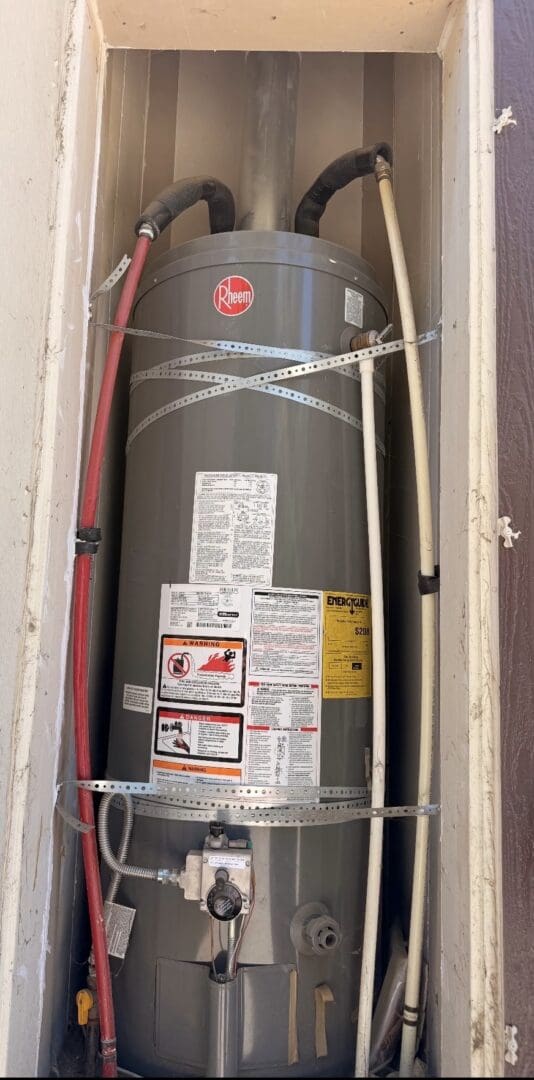
Traditional Tank Water Heater
Before the conversion, this home used a traditional storage-tank water heater that occupied considerably more floor space.
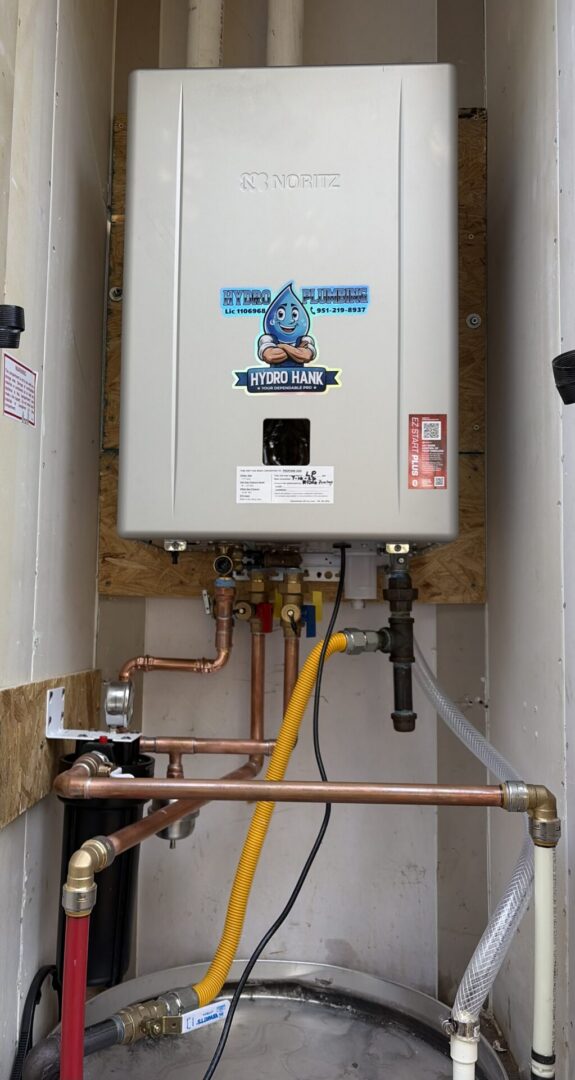
New Tankless Water Heater
The finished tankless installation provides a compact, wall-mounted solution while opening up the area previously occupied by the tank.
More Than Simply Removing the Old Tank
Converting a home from a traditional water heater to tankless may involve changes to the water piping, gas supply, venting, electrical connections, condensate drainage and equipment location.
Hydro Plumbing evaluates the existing setup before installation so the finished system is planned around the home and the requirements of the selected tankless equipment.
Existing System Removal Safe removal of the existing tank-style water heater.
Tankless Equipment Installation Installation based on the selected equipment and home requirements.
Plumbing Modifications Water and gas piping modifications when required for the new system.
Clean Finished Layout A professional installation designed with accessibility and serviceability in mind.
Serving Wildomar, Murrieta, Temecula & Nearby Communities
Hydro Plumbing provides tankless water heater installation, replacement and tank-to-tankless conversions throughout the Temecula–Murrieta Valley. Contact us to discuss your home’s upgrade.
Help Protect Your Tankless Water Heater From Mineral Buildup
Planning a tankless installation also means planning for routine maintenance. In areas with mineral-rich water, scale can build up inside the heat exchanger and water passages. Hydro Plumbing discusses water quality and maintenance expectations when evaluating your installation or replacement.
Mineral Scale Can Build Up Inside the Unit
As water moves through a tankless water heater, dissolved minerals can collect on internal surfaces. Over time, that buildup can make it harder for the system to transfer heat efficiently and may affect water flow through the unit.
Routine flushing and descaling can help remove mineral deposits before they become a larger problem.
Reduced Hot-Water Performance The unit may take longer to heat or struggle under demand.
Temperature Fluctuations Hot-water temperature may feel less consistent than normal.
Restricted Water Flow Scale can contribute to reduced flow through internal passages.
Error Codes or Shutdowns Some systems may display fault codes when performance is affected.
Hard Water Is an Important Consideration in the Murrieta–Temecula Area
Homes throughout Southwest Riverside County commonly deal with mineral-rich water. That makes regular maintenance especially important for tankless systems, because the heat exchanger has narrow internal water passages where scale can accumulate.
Maintenance frequency can vary depending on the water quality, household usage and manufacturer recommendations. Hydro Plumbing can inspect the system and recommend a practical service schedule.
Read Our Murrieta & Temecula Hard Water Guide →Maintenance Frequency Depends on the Home and Water Conditions
There is no single maintenance interval that fits every tankless water heater. Manufacturer recommendations, local water hardness, household usage and whether the home has water-treatment equipment can all affect how often service is appropriate.
When planning your tankless upgrade, ask about the recommended service schedule. Hydro Plumbing can explain maintenance needs for the selected equipment and your home’s water conditions.
Ask About Whole-Home Water Filtration & Scale Reduction
If mineral buildup is a recurring concern, Hydro Plumbing can also discuss whole-home water filtration and treatment options that may help improve water quality throughout the home.
Common Tankless Water Heater Problems & Warning Signs
If your current tankless water heater is struggling, the next step is finding out why. Changes in water temperature, flow, error codes or system operation deserve attention. An evaluation helps you understand whether repair or replacement makes sense for your home.
No Hot Water
If the unit is running but not producing hot water, the cause could involve gas supply, ignition, electrical power, sensors, flow detection or another system component.
NEEDS TROUBLESHOOTINGHot & Cold Temperature Swings
Inconsistent temperatures may be related to flow changes, scale buildup, system sizing, fixture demand or a problem within the tankless unit.
PERFORMANCE ISSUEError Codes
Modern tankless water heaters use diagnostic codes to identify operating problems. The code provides a starting point, but the underlying cause still needs to be properly diagnosed.
DIAGNOSTIC SERVICEReduced Hot-Water Flow
Mineral buildup, filters, restricted passages or plumbing conditions can reduce flow through a tankless water heater and affect overall performance.
FLOW / SCALE CONCERNUnusual Noises
New or unusual sounds from a tankless unit may indicate scale, combustion issues, water-flow problems or another condition that should be inspected.
INSPECTION RECOMMENDEDLeaks Around the Unit
Water around the tankless heater, fittings or nearby piping should not be ignored. Even a small leak can damage surrounding materials or point to a failing connection or component.
ADDRESS PROMPTLYNot Every Tankless Problem Means You Need a New Unit
Many tankless water heater problems can be repaired, especially when the unit is otherwise in good condition. Replacement may make more sense when the equipment is older, repeatedly breaking down, has significant internal damage or the cost of repairs becomes difficult to justify.
Hydro Plumbing can evaluate your system, explain tankless repair options and review replacement scope and pricing when an upgrade makes sense.
- The unit is relatively new
- The problem is isolated and repairable
- The system has been maintained
- Replacement cost is not yet justified
- The unit is older or unreliable
- Repairs are becoming frequent
- Major components are failing
- A newer system better fits the home
Discuss Repair or Replacement
If your tankless water heater is showing an error code, losing performance, leaking or producing inconsistent hot water, Hydro Plumbing can help you compare repair and replacement options.
Frequently Asked Questions About Tankless Installation
Have questions about tankless installation, replacing an older unit, maintenance or hot-water recirculation? Here are straightforward answers to common questions about upgrading your home's hot water in Murrieta, Temecula and surrounding communities.
Can I replace my traditional tank water heater with a tankless water heater? +
Yes. Many homes can be converted from a traditional storage-tank water heater to a tankless system. However, the existing gas supply, venting, electrical requirements, water piping, installation location and household hot-water demand should be evaluated first.
Some conversions are relatively straightforward, while others require modifications to properly support the new tankless equipment.
How much does tankless water heater installation cost? +
Tankless installation cost varies considerably depending on the home and the equipment being installed. A direct replacement of an existing tankless unit may require less work than converting a home from a traditional tank water heater.
Factors can include the tankless model, gas-line requirements, venting, electrical work, plumbing modifications, condensate drainage, recirculation options and installation location. Hydro Plumbing evaluates your existing setup and explains the proposed installation scope and pricing before approved work begins.
Does a tankless water heater provide unlimited hot water? +
A properly sized tankless water heater can continue producing hot water for extended periods because it heats water as it flows through the unit rather than relying on a stored tank of hot water.
However, every tankless system has a maximum heating and flow capacity. If several high-demand fixtures are operating at the same time, the unit still needs enough capacity to support that combined demand.
Will a tankless water heater give me hot water instantly? +
Not necessarily. A tankless unit begins heating water when hot water is requested, but the heated water still has to travel through the home's plumbing before reaching the faucet or shower.
Homes with long plumbing runs may still experience a delay. A compatible hot-water recirculation system can often help reduce the wait for hot water at distant fixtures.
Can Hydro Plumbing install a recirculation pump with a tankless water heater? +
Yes. Hydro Plumbing can evaluate tankless hot-water recirculation options to help reduce the wait for hot water at faucets and showers.
Depending on the plumbing layout and tankless equipment, the solution may involve a dedicated return line, compatible recirculation pump, built-in recirculation capability or another appropriately designed setup.
How often should a tankless water heater be flushed? +
The appropriate maintenance interval depends on the manufacturer's recommendations, water hardness, household usage and whether the home has water-treatment equipment.
Because mineral buildup can be an important concern in Southwest Riverside County, regular inspection and descaling should be part of long-term tankless maintenance.
Does hard water affect tankless water heaters? +
Yes. Dissolved minerals can create scale inside the heat exchanger and water passages of a tankless water heater. Over time, excessive buildup may reduce heat transfer, restrict flow and contribute to performance problems.
Routine flushing, maintenance and appropriate water-treatment options can help manage scale concerns.
Learn more about hard water in Murrieta & Temecula →How long does a tankless water heater last? +
Tankless water heater lifespan varies based on the equipment, installation quality, water conditions, usage and maintenance. Properly installed and maintained equipment can provide many years of service, but individual components can still require repair or replacement over time.
Do tankless water heaters require a larger gas line? +
Some tankless installations require changes to the existing gas piping because tankless equipment can have a different fuel demand than a traditional tank water heater.
Gas-line sizing depends on the equipment input rating, pipe size, pipe length and the demand from other gas appliances. The existing gas system should be evaluated before installation.
Do tankless water heaters require venting? +
Gas-fired indoor tankless water heaters typically require approved venting based on the equipment and manufacturer specifications. Venting requirements can differ from those of traditional tank water heaters.
Outdoor tankless installations may use a different configuration, depending on the unit and installation location.
Is a tankless water heater worth it? +
A tankless water heater can be a good choice for homeowners who value space savings, long hot-water usage, modern equipment and long-term system performance. However, tankless is not automatically the best choice for every home.
The existing plumbing and gas system, household demand, installation cost, maintenance expectations and how long you plan to remain in the home should all be considered.
Does Hydro Plumbing install and replace tankless water heaters in Murrieta and Temecula? +
Yes. Hydro Plumbing installs new tankless water heaters, replaces existing units and handles tank-to-tankless conversions. We also provide repair and maintenance throughout Murrieta, Temecula and nearby Southwest Riverside County communities.
What Should You Know Before Switching to Tankless?
A tankless water heater can be an excellent upgrade, but proper sizing and installation matter. Before converting, evaluate the home's hot-water demand, gas capacity, venting, electrical requirements, water quality, installation location and whether recirculation would improve hot-water delivery.
Local Tankless Installation You Can Feel Good About
Hydro Plumbing is a local, family-owned plumbing company serving Murrieta, Temecula and nearby communities. We focus on clear recommendations, professional workmanship and tankless upgrades planned around the needs of your home.
Licensed & Insured
Hydro Plumbing is a licensed California plumbing contractor and carries insurance for professional residential plumbing work.
CA License #1106968Owner-Led Service
Hydro Plumbing was built around hands-on plumbing experience, dependable communication and a commitment to doing the job correctly.
Local & family-ownedFive-Star Rated
Homeowners choose Hydro Plumbing for friendly service, clear communication and professional plumbing solutions throughout the Temecula–Murrieta Valley.
Trusted by local homeownersTransparent Recommendations
Tankless is not the right answer for every home. We explain the available options so you can compare tankless installation, replacement, repair and traditional water-heater choices.
No one-size-fits-all approachProfessional Installation Planning
Tankless installations are evaluated around hot-water demand, plumbing layout, gas supply, venting, electrical requirements, drainage and future serviceability.
Planned around the homeParts & Labor Warranty
Hydro Plumbing-provided parts and equipment include a one-year parts and labor warranty, giving homeowners added confidence after the installation is complete.
1-year parts & laborTankless Water Heater Installation Across the Temecula–Murrieta Valley
Hydro Plumbing provides new tankless installations, replacement units, tank-to-tankless conversions and recirculation planning for homeowners throughout our local service area.
Plan Your Tankless Installation With Hydro Plumbing
Whether you are replacing an existing tankless unit, converting from a traditional water heater or adding recirculation for faster hot water, Hydro Plumbing can help you plan the right next step.
Plan Your Tankless Water Heater Upgrade With Hydro Plumbing
Whether you need a new tankless water heater installation, an existing unit replaced, a tank-to-tankless conversion or a recirculation solution for faster hot water, Hydro Plumbing can help you review system options, installation requirements and pricing.
Financing Available for Tankless Water Heater Projects
Upgrading to a tankless water heater can be a significant investment in your home's hot-water system. Hydro Plumbing offers financing options that may help qualifying homeowners move forward with an installation, replacement or larger tankless water heater project.
Through our financing partner, you can explore potential payment options online and decide whether an available offer fits your household and project.
- Explore potential financing options online
- Financing may be available for qualifying tankless projects
- Review available lender offers before deciding
- No obligation to accept an offer simply because you checked
Financing is provided through participating third-party lenders. Hydro Plumbing is not a lender and does not determine approval, interest rates or loan terms.
Ready to Upgrade Your Hot Water?
Whether you need a new tankless water heater installation, replacement of an older unit or a tank-to-tankless conversion, Hydro Plumbing can help you compare system options and plan the right installation for your home.
Flow with Hydro… your dependable pro.