




7 Plumbing Parts That Start Failing in 15–25-Year-Old Temecula & Murrieta Homes
7 Plumbing Parts That Start Failing in 15–25-Year-Old Temecula & Murrieta Homes
Your home does not suddenly become “old” when it reaches 15, 20 or 25 years. But this is often a smart time to start paying closer attention to some of the smaller plumbing components that have spent years holding back water pressure, minerals and everyday wear.
Plumbing parts in older homes can begin showing signs of wear long before a major leak occurs. Many homeowners think about their roof, air conditioner or major appliances as their home gets older — but plumbing often stays out of sight and out of mind until something leaks.
The important thing to understand is that age by itself does not mean a plumbing component needs to be replaced. Two homes built during the same year can have very different plumbing conditions depending on water pressure, water quality, installation, maintenance, materials, usage and previous repairs.
However, certain valves, connectors and piping components are worth looking at as a home moves through its second and third decades. Finding deterioration early can sometimes turn a future emergency into a planned repair.
The Water Pressure Regulator
The pressure-reducing valve, commonly called a PRV or pressure regulator, is one component many homeowners never think about until something starts acting differently.
Its job is to help reduce incoming municipal water pressure to a more appropriate pressure for the home’s plumbing system. Like other mechanical components, a pressure regulator can wear or stop controlling pressure properly over time.
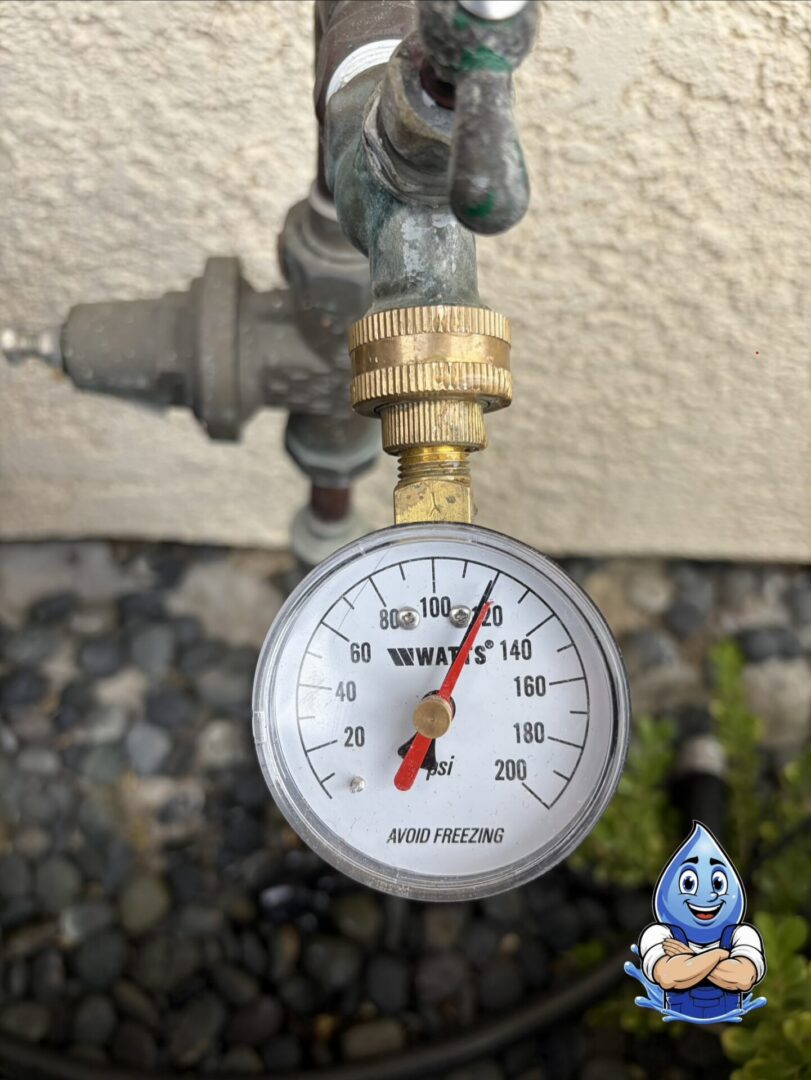
Why high pressure matters
Excessive water pressure can place additional stress on valves, fixture components, flexible supply lines, water-heating equipment and other parts of a plumbing system. That does not mean high pressure is responsible for every leak, but it is an important condition to identify.
- Unusually strong water pressure at faucets or showers
- Banging or noticeable plumbing noises
- Toilet fill valves or faucets needing frequent repair
- Leaks appearing around connections or valves
- A pressure reading that is higher than expected
Angle Stops Under Sinks and Toilets
That little valve underneath a bathroom sink or behind a toilet has an important job: it allows the water to that fixture to be shut off without shutting down the entire home.
Unfortunately, angle stops can go untouched for many years. Corrosion, mineral buildup, aging internal components and lack of operation can make an older valve difficult to turn, unable to shut off completely or more vulnerable to leaking.
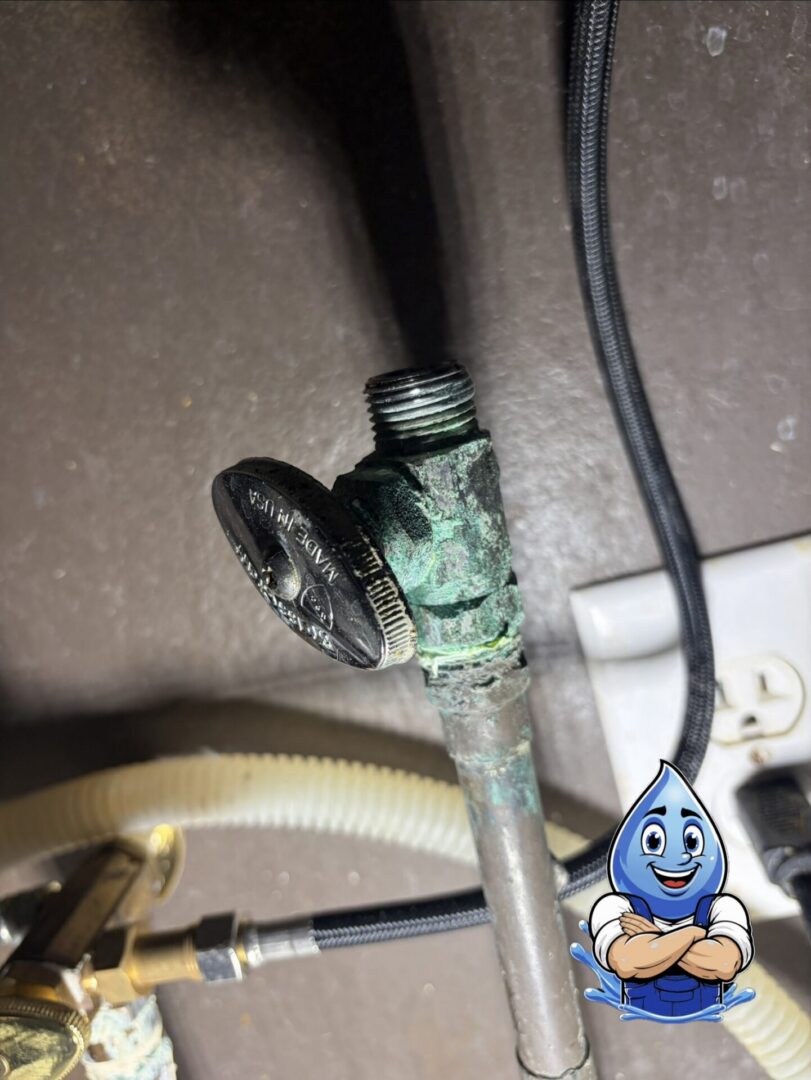
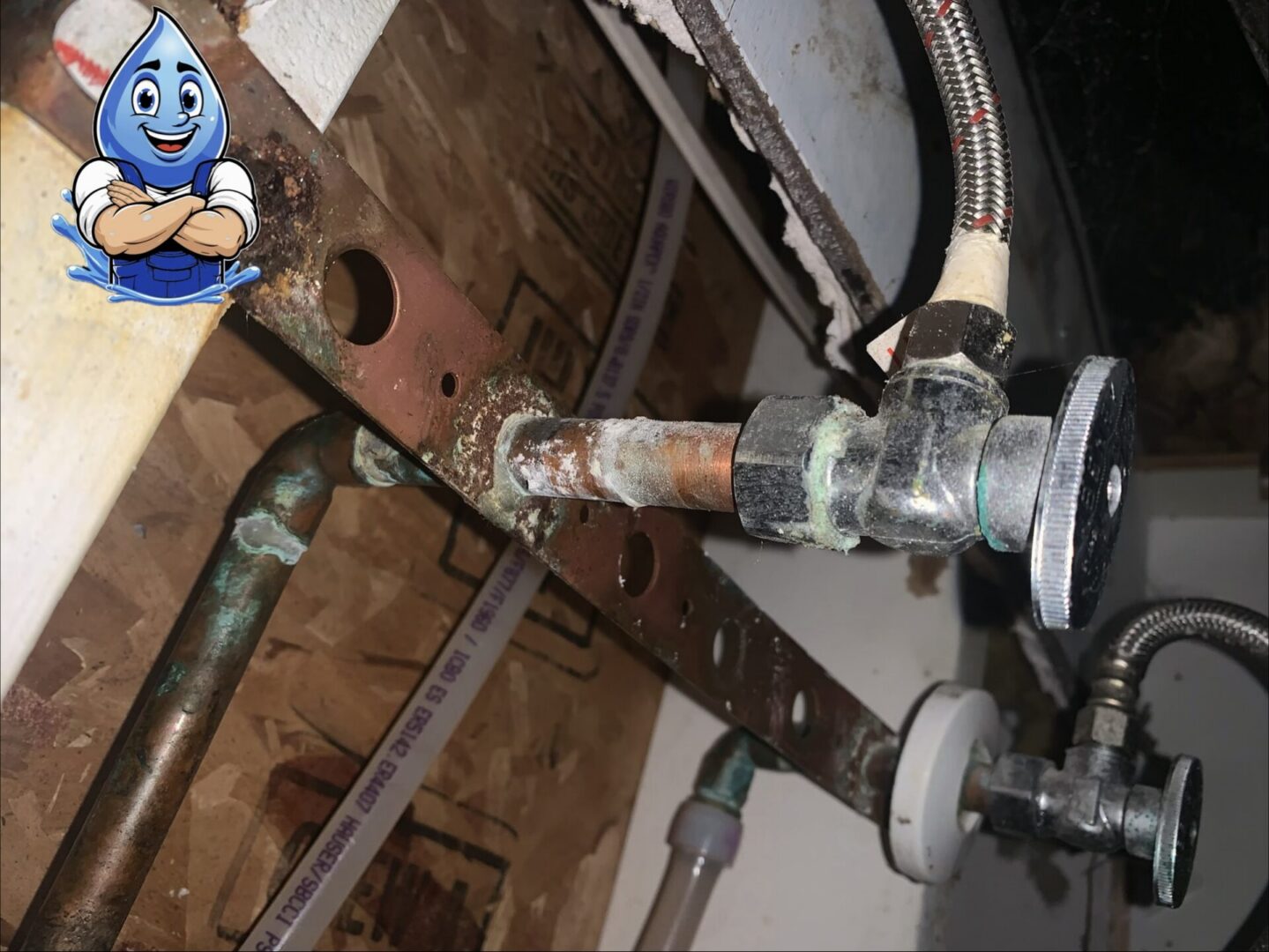
The worst time to discover that an angle stop does not work is when the toilet is overflowing or a faucet connection has started leaking.
- Green, blue, white or crusty buildup around the valve
- Rust or visible corrosion
- Moisture around the valve or connection
- A valve handle that is difficult to operate
- Evidence of an older repair or deteriorated connection
You do not need to repeatedly operate a badly deteriorated valve just to “test” it. If a valve looks heavily corroded or questionable, having it evaluated can be safer than discovering its condition during an emergency.
Faucet and Toilet Supply Lines
Flexible water-supply connectors are small parts, but they continuously carry pressurized water to toilets, faucets and other fixtures.
Because they are tucked underneath sinks and behind toilets, deterioration can go unnoticed. Homeowners should occasionally look for corrosion around fittings, damaged outer material, sharp bends, moisture or signs that a connection has been leaking.
Why these little connections matter
A slow seep can damage cabinetry and flooring over time. A sudden connection failure can release considerably more water. The condition of the connector, installation quality, water pressure and surrounding fittings are generally more useful than simply guessing based on the age of the home.
The Main Water Shutoff Valve
One of the most important plumbing components in a home is also one of the most commonly ignored: the main water shutoff.
If a pipe bursts, a fixture connection fails or a significant leak develops, knowing how to shut off the water can make a major difference while help is on the way.
Older shutoff valves can become difficult to operate, corroded or unreliable. Some homeowners do not even know where their shutoff is located until an emergency happens.
- Where the home’s main water shutoff is located
- What type of valve is installed
- Whether the area around it shows leakage or corrosion
- How household members can respond during a plumbing emergency
Smart water monitoring and automatic shutoff technology is another option for homeowners who want additional protection. Hydro Plumbing also installs whole-home smart water monitoring systems where the home’s plumbing configuration is appropriate.
Water Heater Connections and Components
Your water heater contains and connects to multiple components that can show signs of aging independently of the tank itself.
Connections, shutoff valves, piping and surrounding fittings should be inspected when there is visible corrosion, moisture or deterioration. Mineral buildup can also become an important maintenance consideration in areas with hard water.
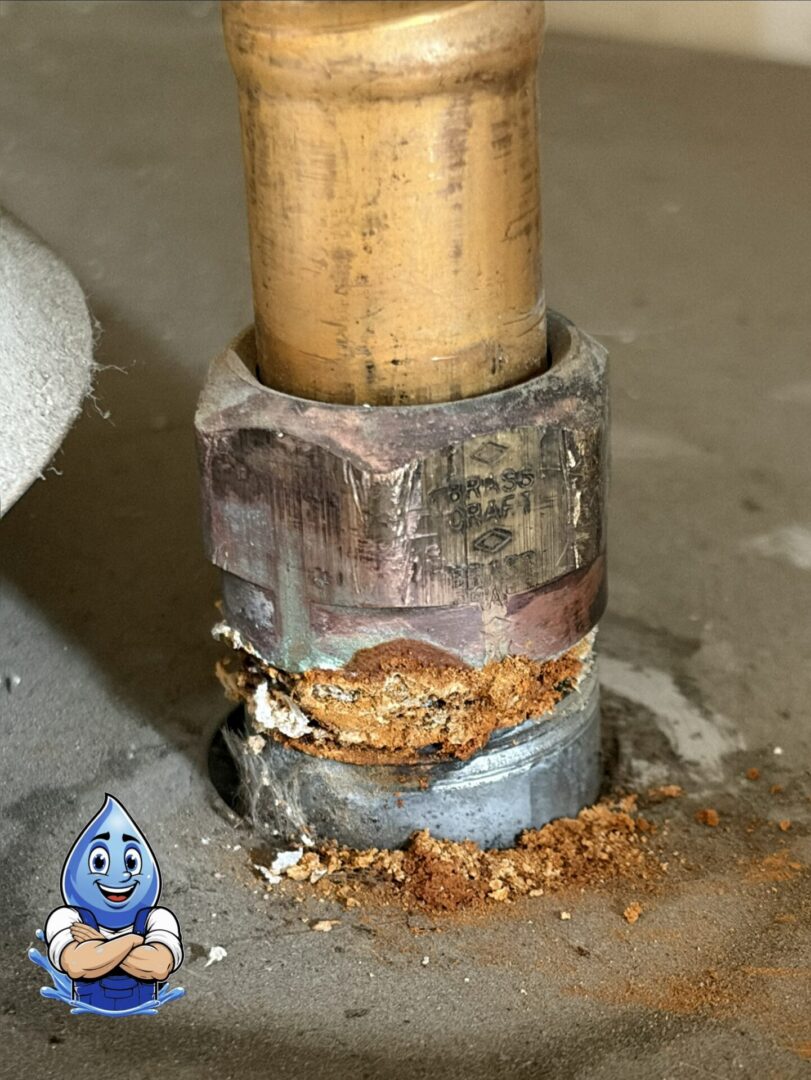
- Corrosion around connections or fittings
- Moisture or active leaking around the unit
- Rust-colored deterioration
- Unusual noises
- Declining hot-water performance
- Visible mineral buildup
Murrieta and Temecula homeowners also commonly encounter mineral-related hard water concerns. If you’re noticing scale around fixtures or plumbing equipment, our local hard-water guide explains the issue in more detail.
For water-heater-specific information, visit Hydro Plumbing’s tank water heater repair and installation page .
Seeing Corrosion or Something That Doesn’t Look Right?
A plumbing component does not automatically need replacement because it looks old. Hydro Plumbing can evaluate the actual condition, explain what we find and discuss practical options.
Copper Piping and Previous Pipe Repairs
Copper plumbing can provide many years of service, so seeing copper piping in an older home does not automatically mean a repipe is needed.
What matters is the condition of the piping and the home’s history.
One isolated repair is very different from repeated leaks occurring in multiple areas. Water pressure, water chemistry, installation conditions, pipe condition and previous repairs can all be relevant when evaluating recurring pipe problems.
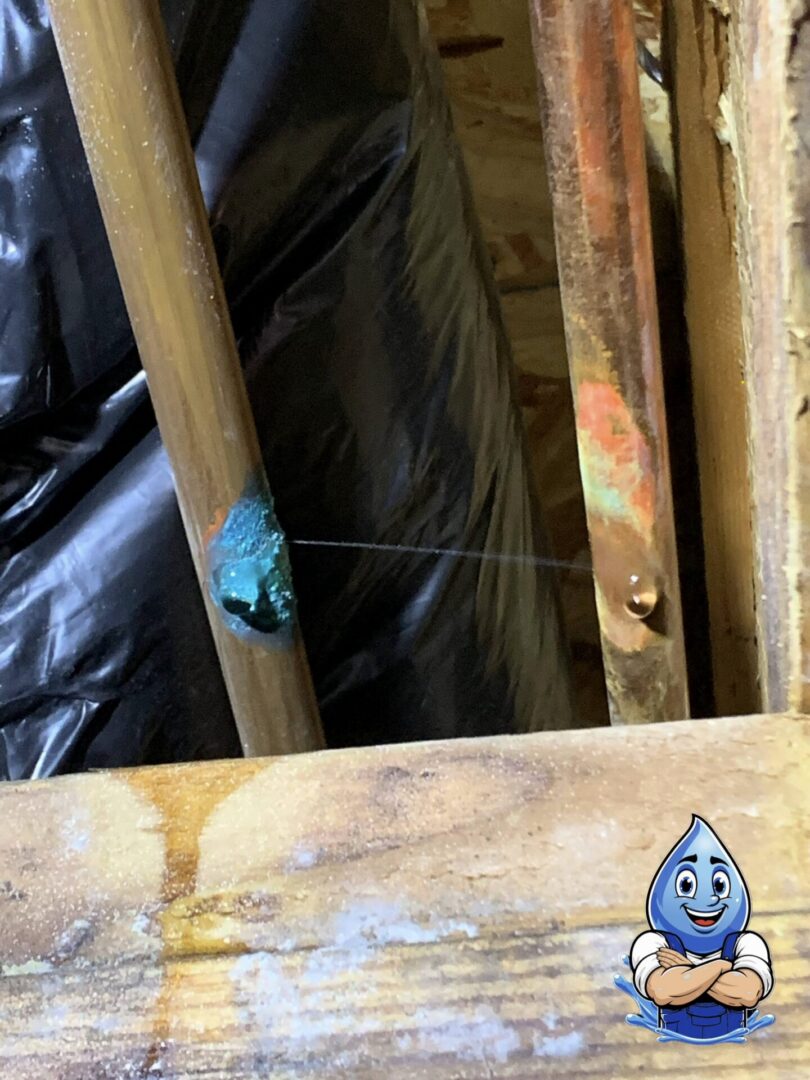
- Repeated pinhole leaks
- Green or blue staining around copper and fittings
- White mineral deposits around a connection
- Previous patches or numerous repaired sections
- Water stains on ceilings or walls
- Unexpected moisture or unexplained water usage
One leak doesn’t automatically mean “repipe the house.”
This is important. A homeowner should not be told that an entire plumbing system has failed simply because one repair was necessary.
On the other hand, a pattern of repeated failures can justify looking at the system more broadly. The right recommendation should be based on what is actually happening in that particular home.
You can learn more about repeated piping concerns in Hydro Plumbing’s Plumbing FAQ Resource Center .
Washer, Refrigerator and Appliance Water Connections
Some of the most overlooked plumbing connections are hiding behind appliances. Washing machines, refrigerators, dishwashers and similar water-connected appliances can have hoses, valves or fittings that homeowners rarely see.
That means a connection may sit undisturbed for years while remaining under regular use or water pressure.
- Washing-machine water valves and hoses
- Refrigerator water-supply connections
- Dishwasher supply connections
- Nearby shutoff valves
- Flooring or cabinetry for signs of past moisture
If an appliance needs to be pulled away from a wall to access plumbing, use appropriate care. Refrigerators, washing machines and their connections can be heavy or difficult to move safely.
Does “Old” Mean It Needs to Be Replaced?
No — and that’s an important distinction.
A 20-year-old valve that is dry, functional and in good condition is not the same situation as a heavily corroded valve that is actively leaking. Likewise, the age of a home alone does not tell a plumber whether piping, valves or equipment should be replaced.
Age is better used as a reminder to inspect and pay attention, not as an automatic replacement deadline.
Hydro Plumbing’s approach is to evaluate the condition we actually find, explain the concern in understandable terms and provide recommendations based on the home’s plumbing system — not simply the date the house was built.
A Simple Check of Plumbing Parts in Older Homes
You don’t need to take plumbing apart to become more aware of its condition. A simple visual walk-through can help you notice potential concerns earlier.
Why Plumbing Awareness Matters in Murrieta & Temecula Homes
Plumbing problems do not always begin with a dramatic burst pipe. Many start with smaller warning signs — corrosion around a valve, a connection beginning to seep, unusually high pressure, mineral buildup or a history of repairs that is becoming more frequent.
Understanding the condition of plumbing parts in older homes can help homeowners identify small warning signs before they become larger problems.
Paying attention to those signs gives homeowners more information and, in some situations, more time to make a planned decision rather than dealing with an emergency.
Hydro Plumbing provides residential plumbing repair, installation and maintenance throughout Murrieta, Temecula, Wildomar, French Valley and nearby Southwest Riverside County communities.
Want to know more about what Hydro Plumbing looks for when evaluating plumbing concerns? Learn why local homeowners choose Hydro Plumbing →
Not Sure What Condition Your Plumbing Is In?
If you’ve spotted corrosion, unusually high water pressure, a questionable valve, an aging water-heater connection or recurring leaks, Hydro Plumbing can help evaluate what’s going on and explain the next step.